
Sharp Landscaping
Trees & Shrubs
Catalog
Explore Some of the Trees We Offer
Don't see what you're looking for? We'll do our best to find it for you!
This is a selection of the trees we offer, not a full inventory, and availability varies. Sizes and growth rates are approximate, with sources on each tree. Reference photo images are not necessarily our projects.
We quote every planting for your site: pricing depends on plant size, availability, delivery and installation requirements. Choose Request a Quote on any plant and its name is included in your request.
Evergreen privacy trees
Not sure how to lay one out? See the planting styles below.
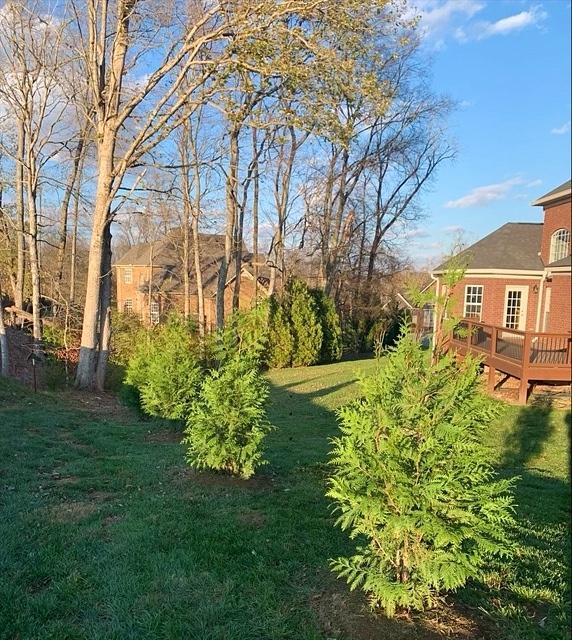
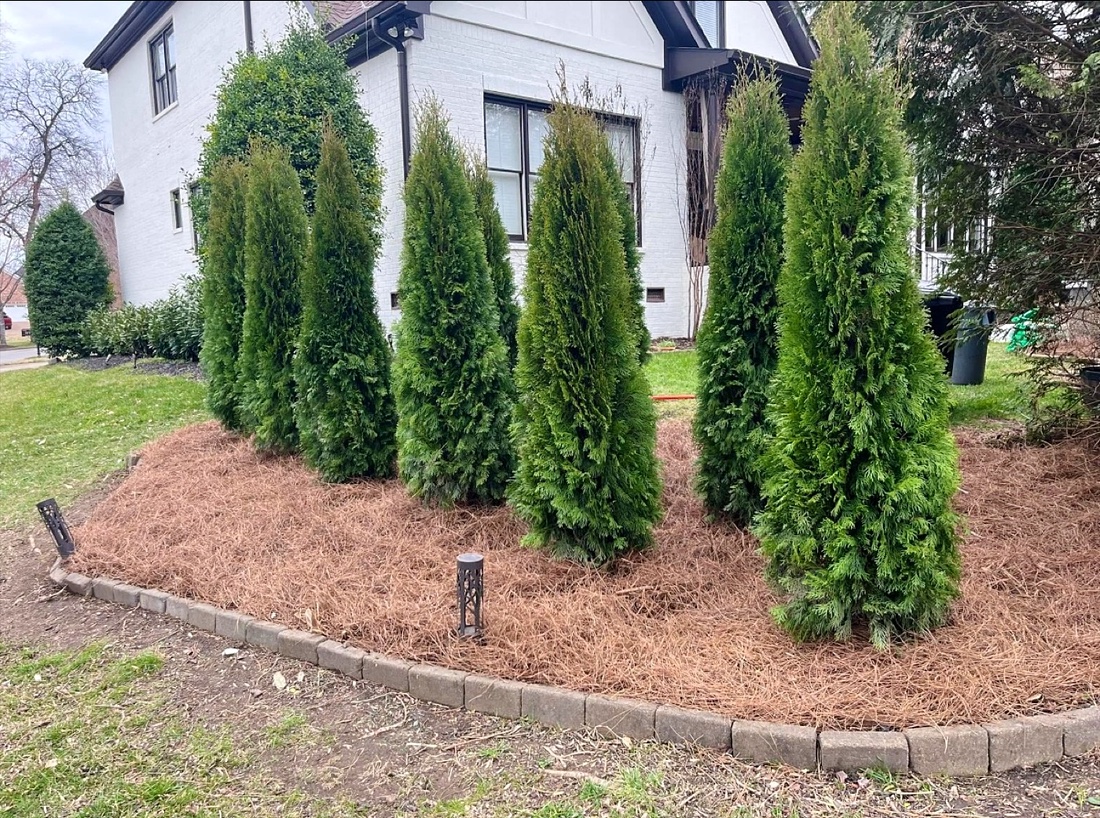
Our project photo Green Giant Arborvitae
- Mature height
- 40–60 ft
- Mature spread
- 12–25 ft
- Growth rate
- Fast, up to 3–4 ft per year in good conditions
- Sun
- Full sun
- Planting distance
- 5–6 ft apart for a screen
More about this tree
- Sources differ on growth rate: most call it fast, one rates it slow.
- Can quickly grow very large if planted where there is not room for its full size.
- Often used for screens and windbreaks.
- Some sources list up to 70 ft.
- Light afternoon shade helps in hot summers.
Sources: NC State Extension, Missouri Botanical Garden, Penn State Extension, Morton Arboretum
Request a QuotePricing depends on size, availability and installation- Evergreen
Photo coming soonEmerald Green Arborvitae
- Mature height
- 10–15 ft
- Mature spread
- 3–4 ft
- Growth rate
- Moderate, about 6–12 in. per year
- Sun
- Full sun to part shade
- Planting distance
- About 3–4 ft apart for a single-row screen
More about this tree
- Narrow, tidy, pyramid shape that suits tight spaces.
- Planting much closer than its width can leave gaps as the trees crowd each other.
- Also sold as Smaragd.
- Growth rate is from the American Conifer Society; one extension source rates arborvitae as a whole slow.
- Does best in full sun.
Sources: Missouri Botanical Garden, Morton Arboretum, Penn State Extension, Illinois Extension, American Conifer Society
Request a QuotePricing depends on size, availability and installation 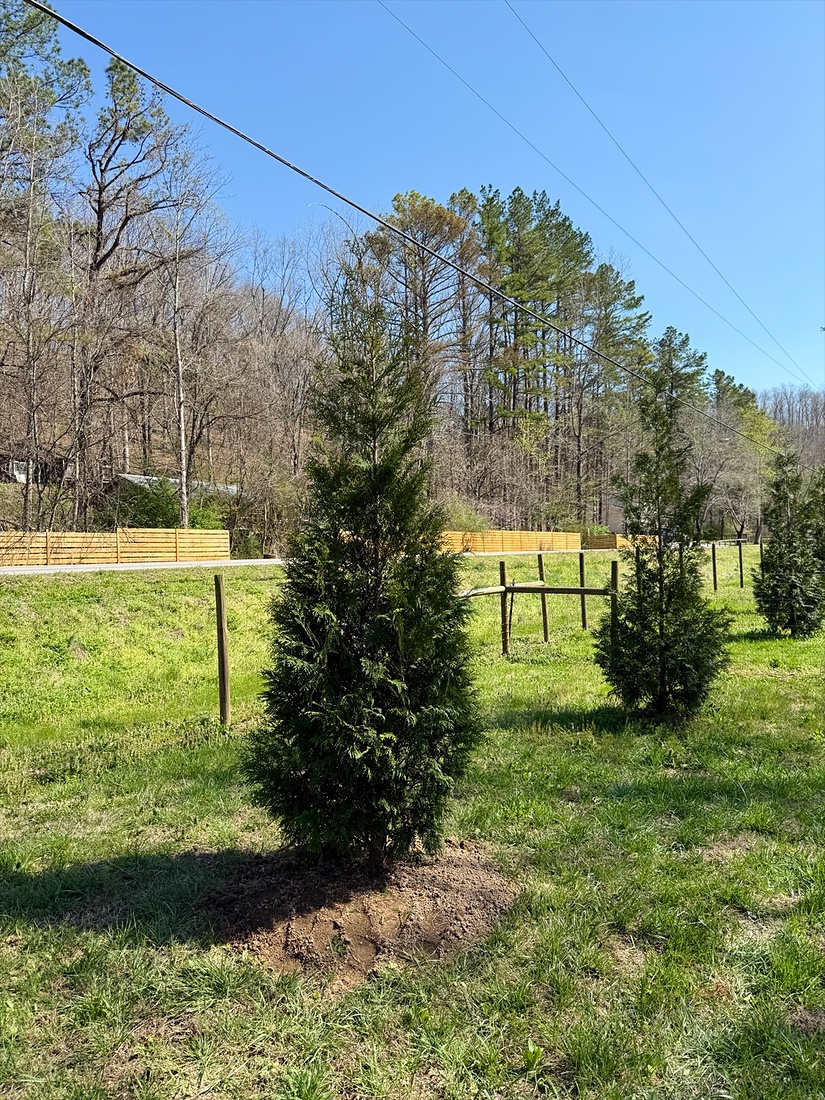
Photo by Sharp Landscaping American Pillar Arborvitae
- Mature height
- 20–30 ft
- Mature spread
- 3–5 ft
- Growth rate
- Slow to moderate, up to about 2 ft per year at best
- Sun
- Full sun to part shade
More about this tree
- A narrow upright form.
- Sources disagree on size for this cultivar; figures are typical ranges.
Sources: Gardenia.net, Morton Arboretum
Request a QuotePricing depends on size, availability and installation- Evergreen
Photo coming soonWintergreen Arborvitae
- Mature height
- 20–30 ft
- Mature spread
- 5–10 ft
- Growth rate
- Moderate
- Sun
- Full sun to part shade
More about this tree
- Figures are for the cultivar 'Hetz Wintergreen': narrow and columnar with a central leader.
- Growth rate is the arborvitae species rating, not specific to this cultivar.
Sources: Morton Arboretum
Request a QuotePricing depends on size, availability and installation 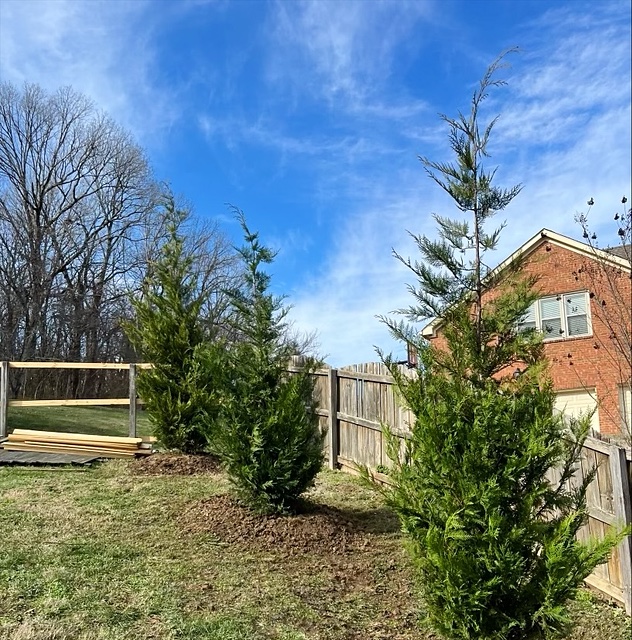
Our project photo Murray Cypress
- Mature height
- 30–40 ft
- Mature spread
- 6–15 ft
- Growth rate
- Fast, up to 3–4 ft per year
- Sun
- Full sun
More about this tree
- A Leyland cypress cultivar. Leyland cypress is often planted too close together, so plan for its full mature size.
- Approximate figures: height and spread come from grower listings, which differ on spread (6–20 ft), not from extension data. Growth of 3–4 ft per year is the Leyland cypress rate for young trees.
- Extension sources list the Leyland cypress parent at 60–70 ft tall, so leave generous room. Sun is the Leyland cypress rating.
Sources: Clemson HGIC, NC State Extension, Utah State Extension, Grower listings (approximate)
Request a QuotePricing depends on size, availability and installation- Evergreen
Photo coming soonArizona Cypress
- Mature height
- 25–60 ft
- Mature spread
- 15–25 ft
- Growth rate
- Fast to moderate
- Sun
- Full sun
More about this tree
- Foliage thins in shade.
- Shallow roots can let it topple in wind if planted in heavy clay.
- Drought tolerant once established.
- Several forms are sold for landscaping, so ask which one is available.
Sources: NC State Extension, UF/IFAS, Clemson HGIC
Request a QuotePricing depends on size, availability and installation 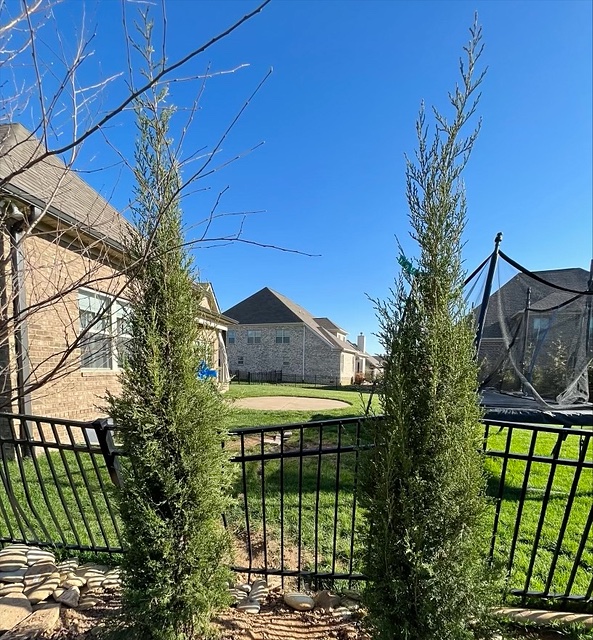
Our project photo Taylor Juniper
- Mature height
- 15–20 ft
- Mature spread
- 3–4 ft
- Growth rate
- Moderate
- Sun
- Full sun
More about this tree
- A narrow, upright juniper used as an accent or a narrow screen.
- Handles dry and poor soil; does not like constantly wet soil.
Sources: Missouri Botanical Garden, NC State Extension, Morton Arboretum
Request a QuotePricing depends on size, availability and installation- Evergreen
Photo coming soonHetzi Columnaris Juniper
- Mature height
- 15–18 ft
- Mature spread
- 5–8 ft
- Growth rate
- Moderate to fast
- Sun
- Full sun
More about this tree
- A tall, narrow, upright juniper used for a slim screen or an accent.
- Figures come from grower listings, which vary (about 10–18 ft tall and 3–8 ft wide), not from extension data.
- This is not the wide-spreading Hetzi juniper.
Sources: Grower listings (approximate)
Request a QuotePricing depends on size, availability and installation 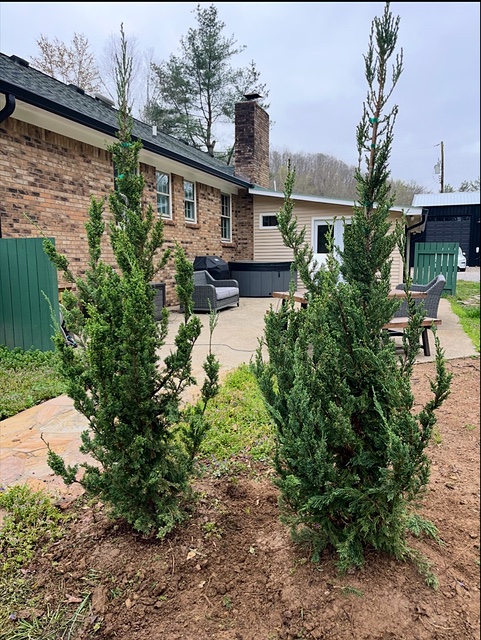
Photo by Sharp Landscaping Trautman Juniper
More about this tree
Size details are being confirmed. Ask us what is available.
Request a QuotePricing depends on size, availability and installation- Evergreen
Photo coming soonNellie R. Stevens Holly
- Mature height
- 15–30 ft
- Mature spread
- 8–15 ft
- Growth rate
- Fast
- Sun
- Full sun to part shade
More about this tree
- Dense, cone-shaped evergreen with glossy leaves and red berries.
- Can also be trained as a small tree.
- Prefers rich, acidic, well-drained soil; avoid wet sites.
- One source lists a spread of up to 25 ft.
- Some afternoon protection helps prevent leaf scorch.
Sources: NC State Extension, Missouri Botanical Garden, Clemson HGIC, Univ. of Maryland Extension
Request a QuotePricing depends on size, availability and installation 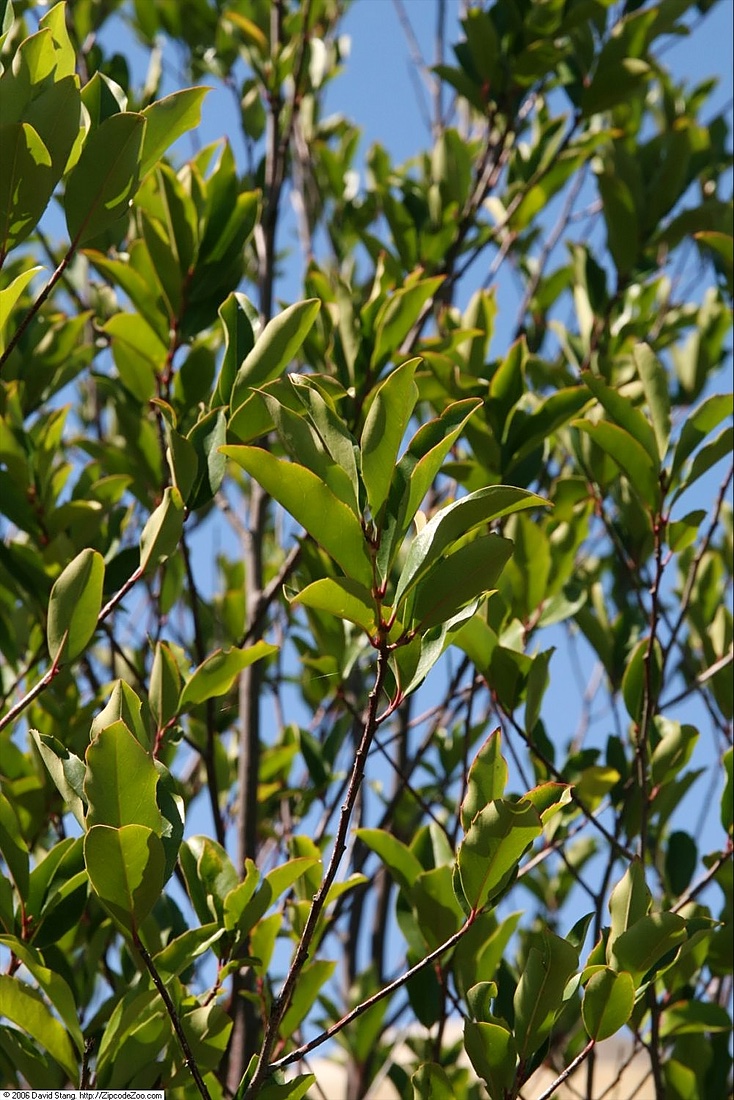
Reference photo Carolina Cherry Laurel
- Mature height
- 25–40 ft
- Mature spread
- 15–25 ft
- Growth rate
- Moderate to fast
More about this tree
- The 'Compacta' cultivar is much smaller.
- A broadleaf evergreen sometimes used for screening.
Sources: UF/IFAS, NC State Extension, Cal Poly SelecTree
Request a QuotePricing depends on size, availability and installationPhoto shows the foliage of Prunus caroliniana; the named variety may look a little different. Photo: David J. Stang, CC BY-SA 4.0, resized and color-adjusted

Ornamental trees
Includes shade and fall-color trees.
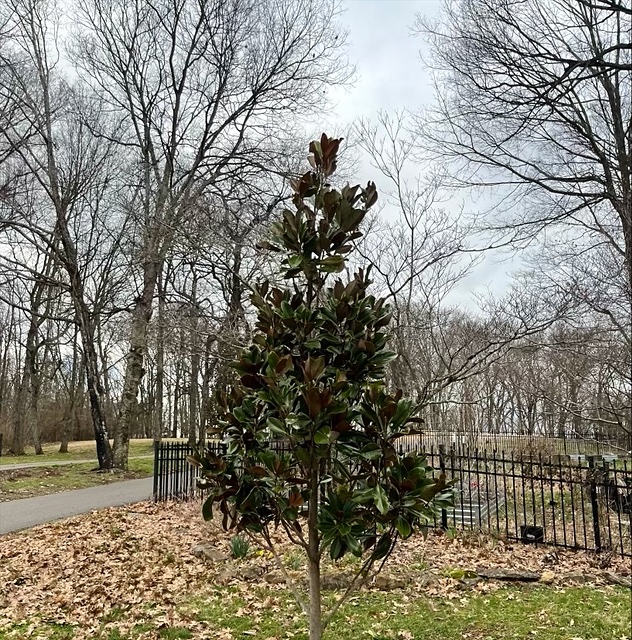
Our project photo D.D. Blanchard Magnolia
- Mature height
- 35–50 ft
- Mature spread
- 20–35 ft
- Growth rate
- Moderate, about 1–2 ft per year
- Sun
- Full sun to part shade
More about this tree
- A large southern magnolia cultivar with a pyramid shape.
- Growth rate is the southern magnolia species rating.
- Full sun if the soil stays moist; otherwise part shade.
Sources: Missouri Botanical Garden, Clemson HGIC, NC State Extension
Request a QuotePricing depends on size, availability and installation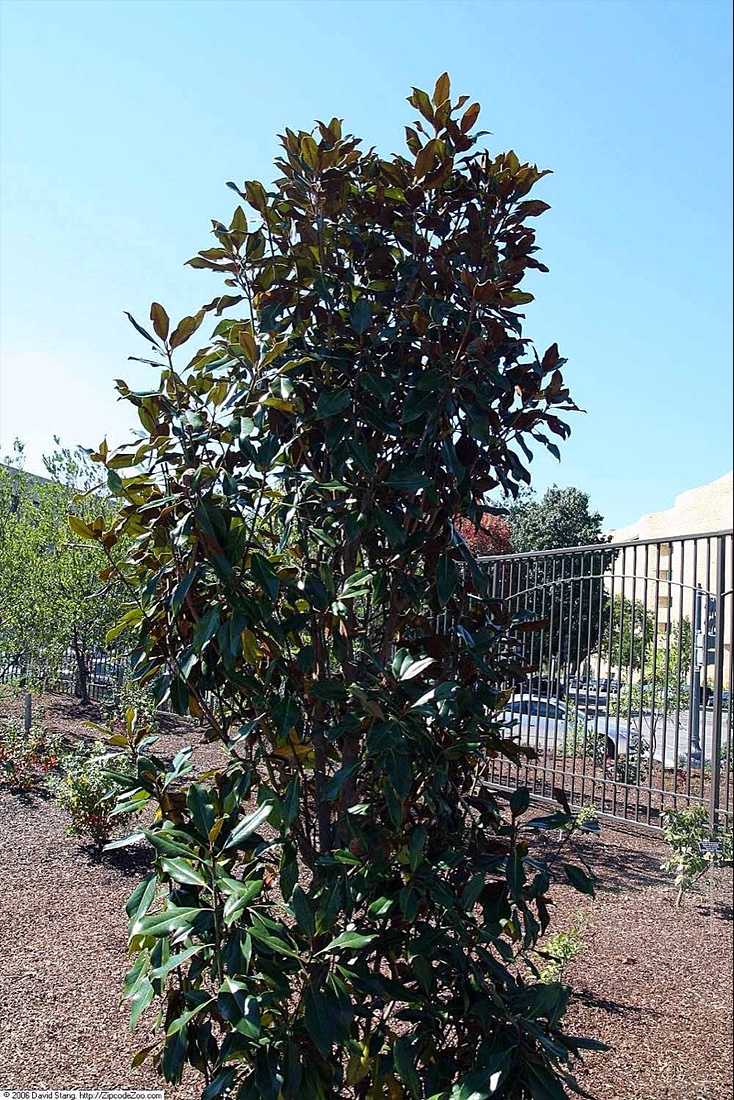
Reference photo Kay Parris Magnolia
- Mature height
- 15–25 ft
- Mature spread
- 8–15 ft
- Growth rate
- Fast for a magnolia
- Sun
- Full sun to part shade
More about this tree
- A compact southern magnolia selection, smaller than the species.
- Sources give somewhat different sizes; figures are ranges.
- Full sun if the soil stays moist; otherwise part shade.
Sources: NC State Extension, Missouri Botanical Garden, Clemson HGIC
Request a QuotePricing depends on size, availability and installation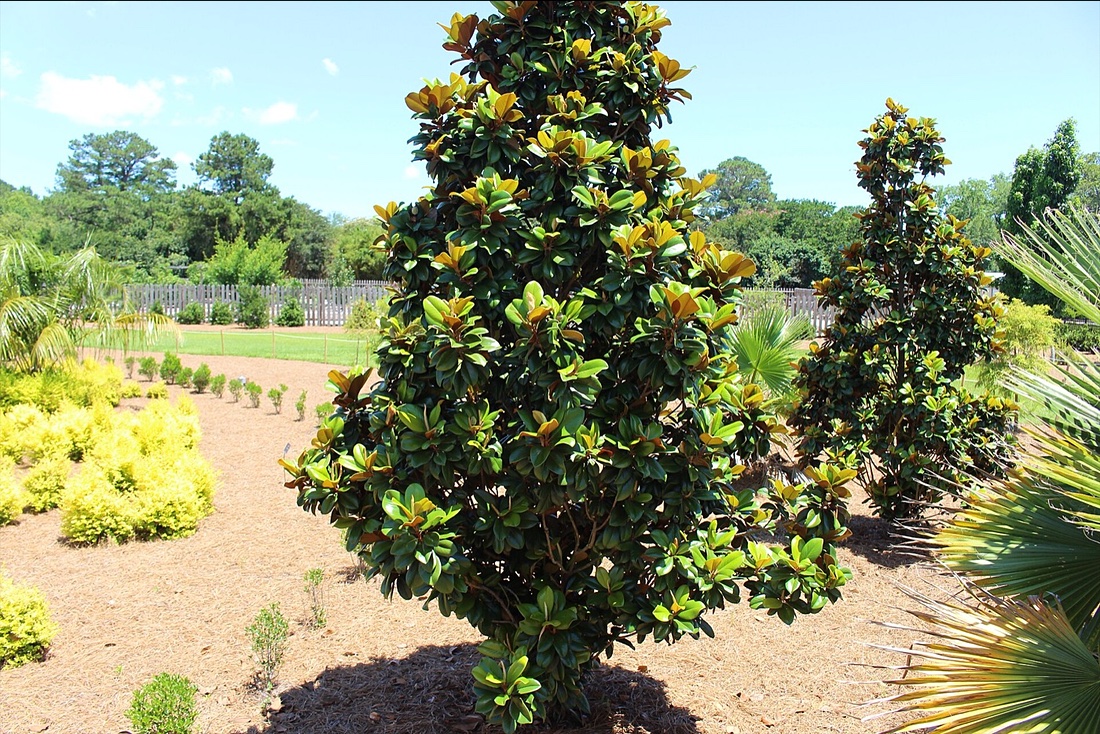
Reference photo Teddy Bear Magnolia
- Mature height
- About 20 ft
- Mature spread
- About 12 ft
- Growth rate
- Moderate
- Sun
- More compact in full sun
More about this tree
- A compact southern magnolia with a rust-brown underside on the leaves, also sold as Southern Charm.
- Size comes from one extension source; confirm against the tree tag.
- Its growth rating is for southern magnolias in general.
Sources: Clemson HGIC
Request a QuotePricing depends on size, availability and installation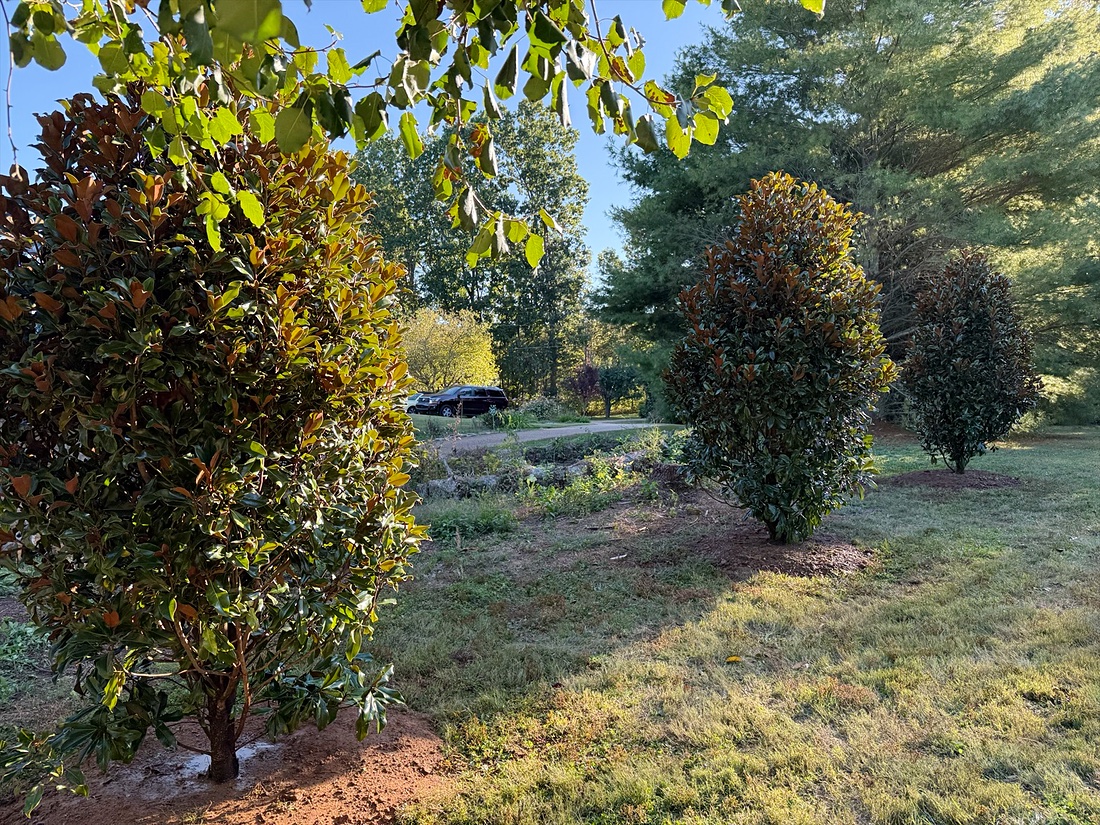
Photo by Sharp Landscaping Bracken's Brown Beauty Magnolia
- Mature height
- 30–50 ft (sources vary)
- Mature spread
- 15–30 ft (sources vary)
More about this tree
- Sources disagree on growth rate, from slow to fast.
- A southern magnolia cultivar.
Sources: Nursery listings, BC Arboretum
Request a QuotePricing depends on size, availability and installation- Deciduous
Photo coming soonJane Magnolia
- Mature height
- 10–25 ft (sources differ widely)
- Mature spread
- 5–20 ft (sources differ widely)
More about this tree
Size information is still being verified.
- Most nursery listings give 10 to 15 ft tall; some give 20 to 25 ft as the long-term size.
- We confirm size for your site rather than guess.
Sources: Nursery listings
Request a QuotePricing depends on size, availability and installation - Tree
Photo coming soonSweetbay Magnolia
- Mature height
- 40–50 ft (smaller cultivars exist)
- Mature spread
- 15–25 ft
- Growth rate
- Moderate
- Sun
- Full sun to part shade
More about this tree
- Prefers consistently moist, acidic, organically rich soil.
- Cultivars such as 'Jim Wilson' stay smaller, about 10 to 20 ft.
Sources: UF/IFAS, NC State Extension
Request a QuotePricing depends on size, availability and installation 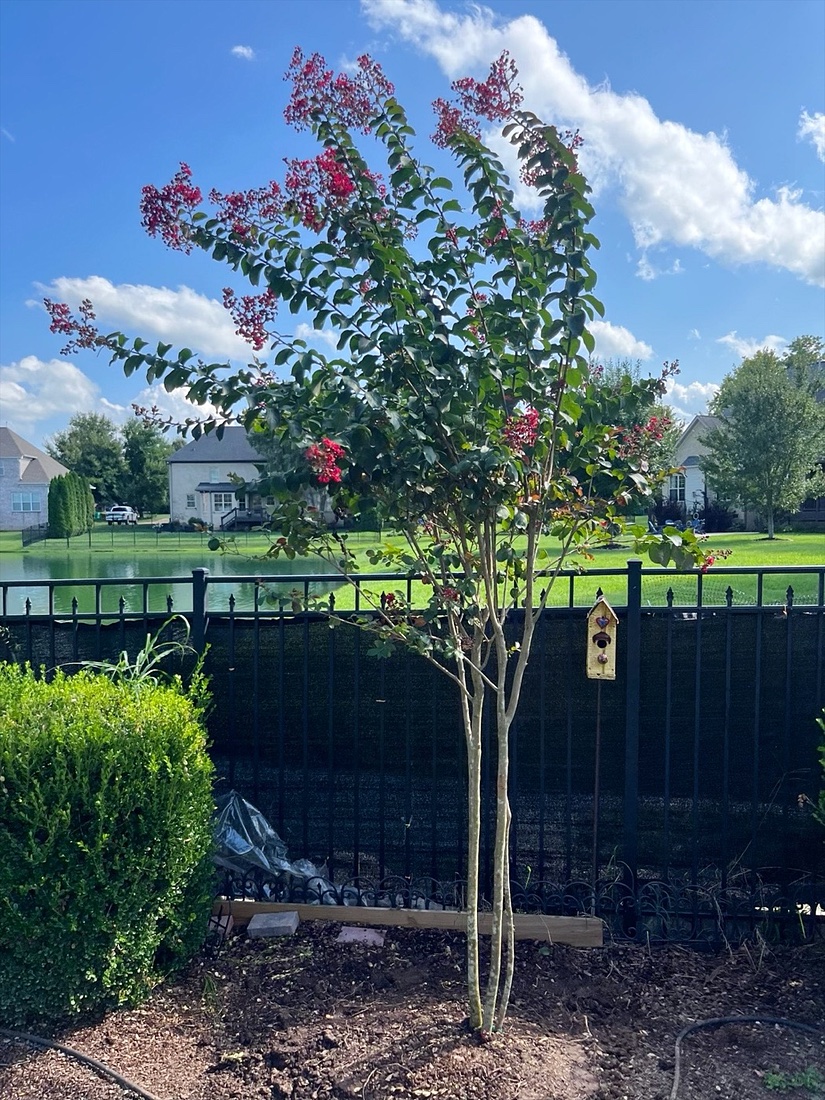
Our project photo Crape Myrtle
- Mature height
- 10–35 ft, depending on the variety
- Mature spread
- 6–40 ft, depending on the variety
- Growth rate
- Moderate to fast
- Sun
- Full sun (at least six hours)
More about this tree
- Summer-blooming flowering tree; sold as dwarf, mid-size and tall varieties.
- Shade reduces flowering and raises disease risk.
- Size depends on the variety: some dwarfs stay around 10 ft, taller ones reach 20 to 30 ft.
- We confirm the exact variety and size when you request a quote.
Sources: UF/IFAS, Clemson HGIC
Request a QuotePricing depends on size, availability and installation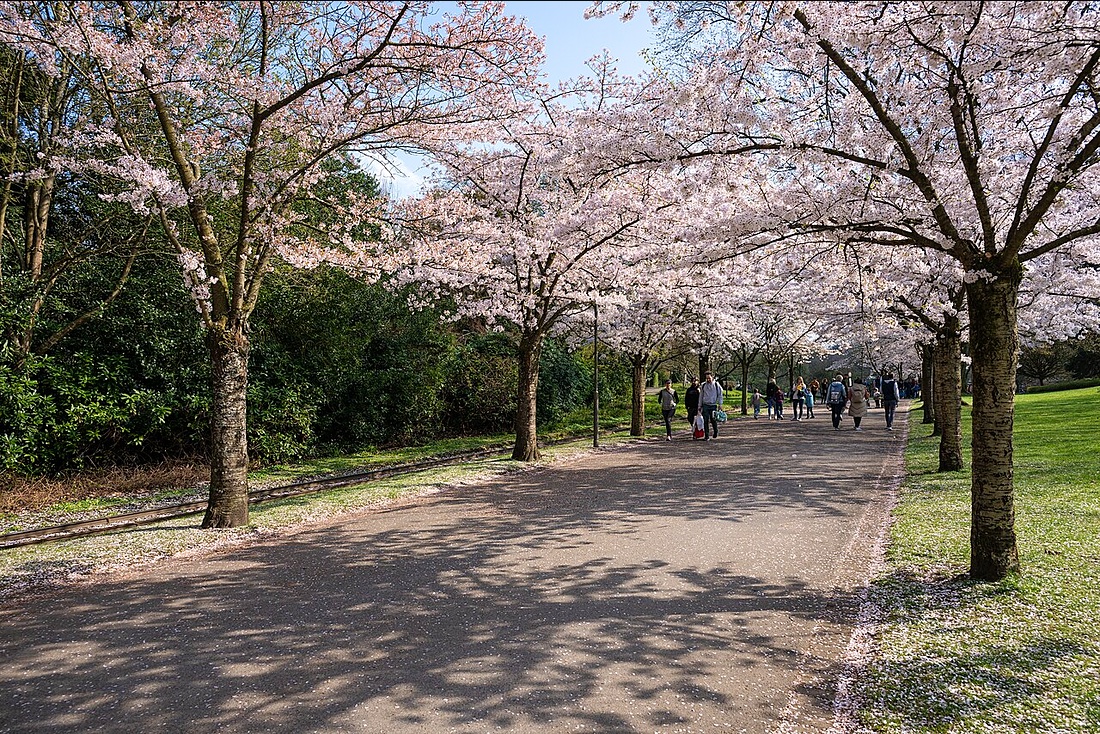
Reference photo Yoshino Cherry
- Mature height
- 25–50 ft (sources vary)
- Mature spread
- 25–50 ft (sources vary)
- Growth rate
- Moderate to fast
- Sun
- Full sun
More about this tree
- Spring-flowering ornamental cherry.
- Relatively short-lived, about 15 to 20 years, according to Clemson Extension.
- The 'Akebono' cultivar stays smaller, about 25 ft.
Sources: Clemson HGIC, UF/IFAS, NC State Extension, Utah State Extension
Request a QuotePricing depends on size, availability and installation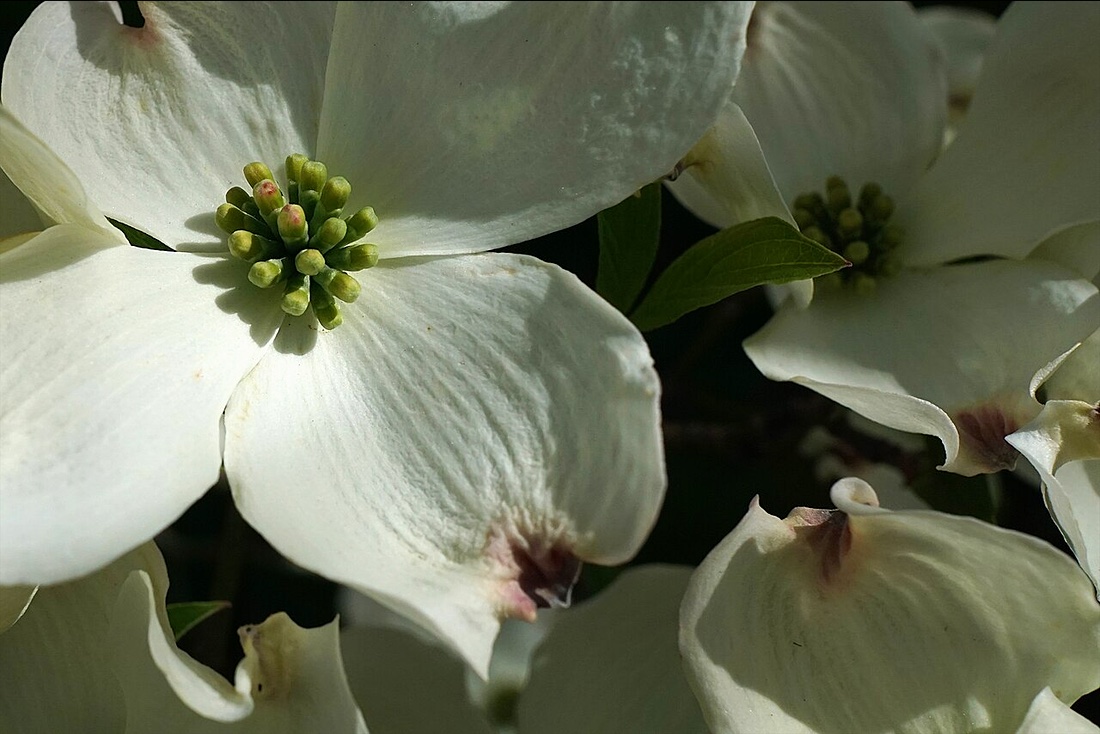
Reference photo White Flowering Dogwood
- Mature height
- 20–30 ft
- Mature spread
- 25–30 ft
- Growth rate
- Slow to moderate
- Sun
- Part shade to full sun (sources differ)
More about this tree
- Clemson Extension notes it stays about 15 to 20 ft in full sun and can reach about 40 ft in shade.
Sources: UF/IFAS, Clemson HGIC
Request a QuotePricing depends on size, availability and installationPhoto shows the flowers of Cornus florida; the named variety may look a little different. Photo: Plant Image Library (Boston, USA), CC BY-SA 2.0, resized and color-adjusted
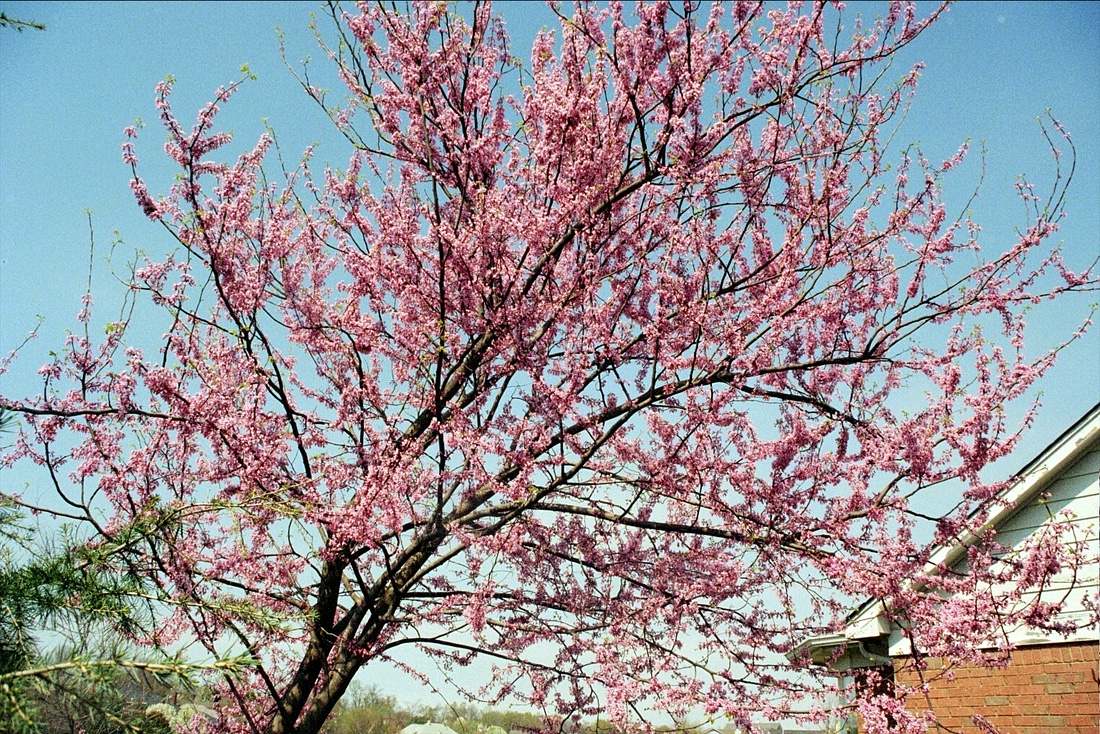
Reference photo Eastern Redbud
- Mature height
- 20–30 ft
- Mature spread
- 15–35 ft
- Growth rate
- Moderate
- Sun
- Full sun to part shade
More about this tree
- A small tree with pink flowers in early spring and heart-shaped leaves.
- Often grows with a divided trunk close to the ground.
- Growth ratings in the sources range from slow to fast; sizes are typical ranges.
Sources: Clemson HGIC, UF/IFAS
Request a QuotePricing depends on size, availability and installationPhoto: Betty from Memphis, TN, CC BY 2.0, resized and color-adjusted
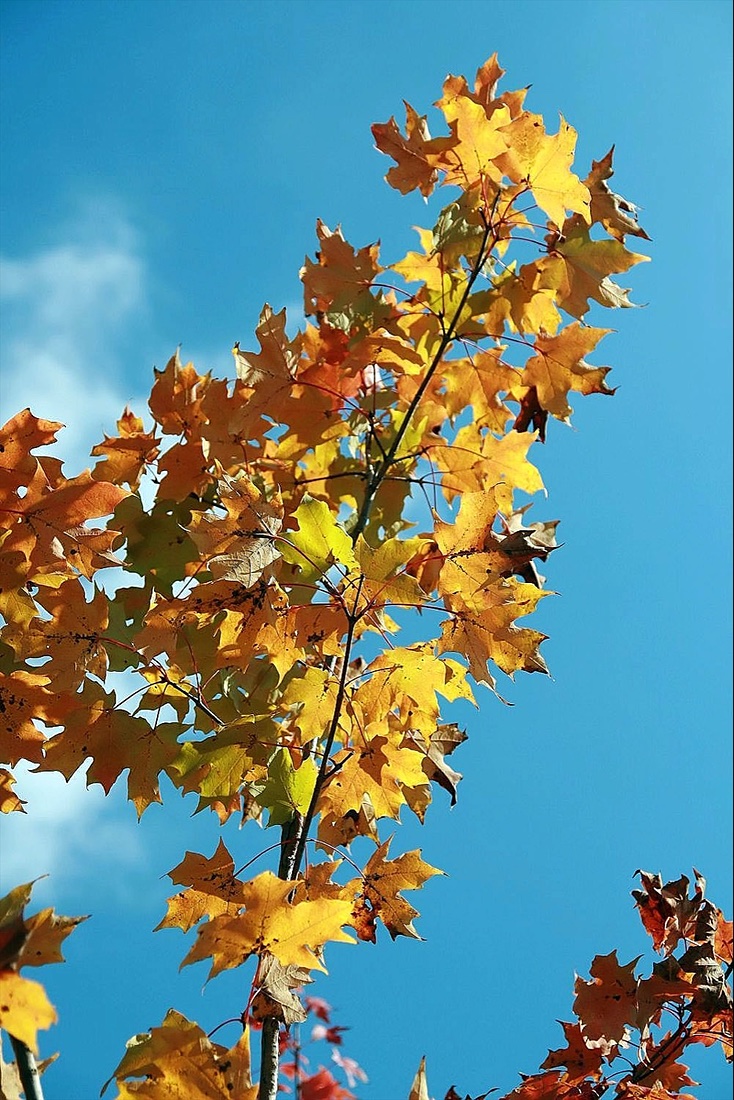
Reference photo Autumn Blaze Maple
- Mature height
- 40–55 ft
- Mature spread
- 30–40 ft
- Growth rate
- Fast
- Sun
- Full sun to part shade
More about this tree
- Orange-red to scarlet fall color that lasts later than many maples.
- Tolerates some drought once established.
Sources: Missouri Botanical Garden, Clemson HGIC, NC State Extension
Request a QuotePricing depends on size, availability and installation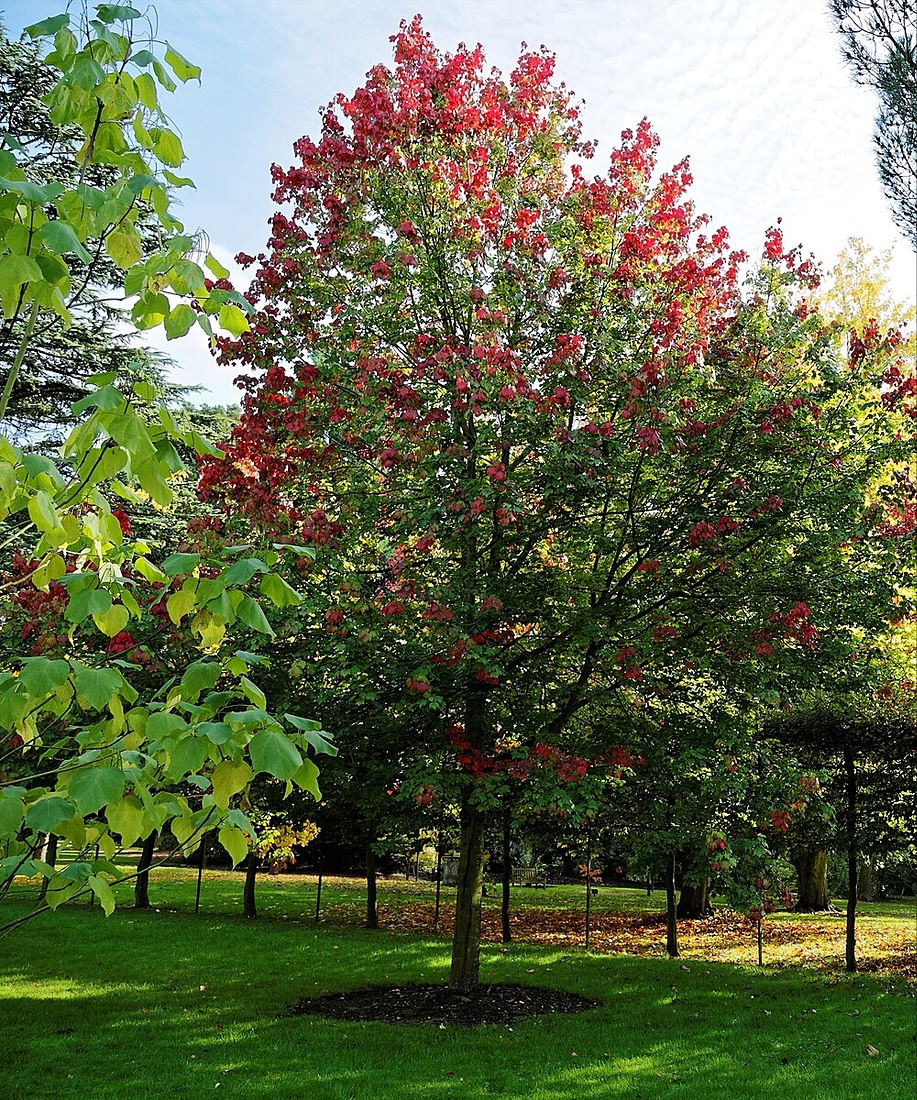
Reference photo October Glory Maple
- Mature height
- 40–60 ft
- Mature spread
- 20–40 ft
- Growth rate
- Medium to fast
- Sun
- Full sun to part shade
More about this tree
- Orange to red fall color, often later than other maples and sometimes hit by an early freeze.
- Shallow roots can lift nearby sidewalks or driveways.
Sources: Missouri Botanical Garden, Clemson HGIC, Morton Arboretum, UF/IFAS
Request a QuotePricing depends on size, availability and installation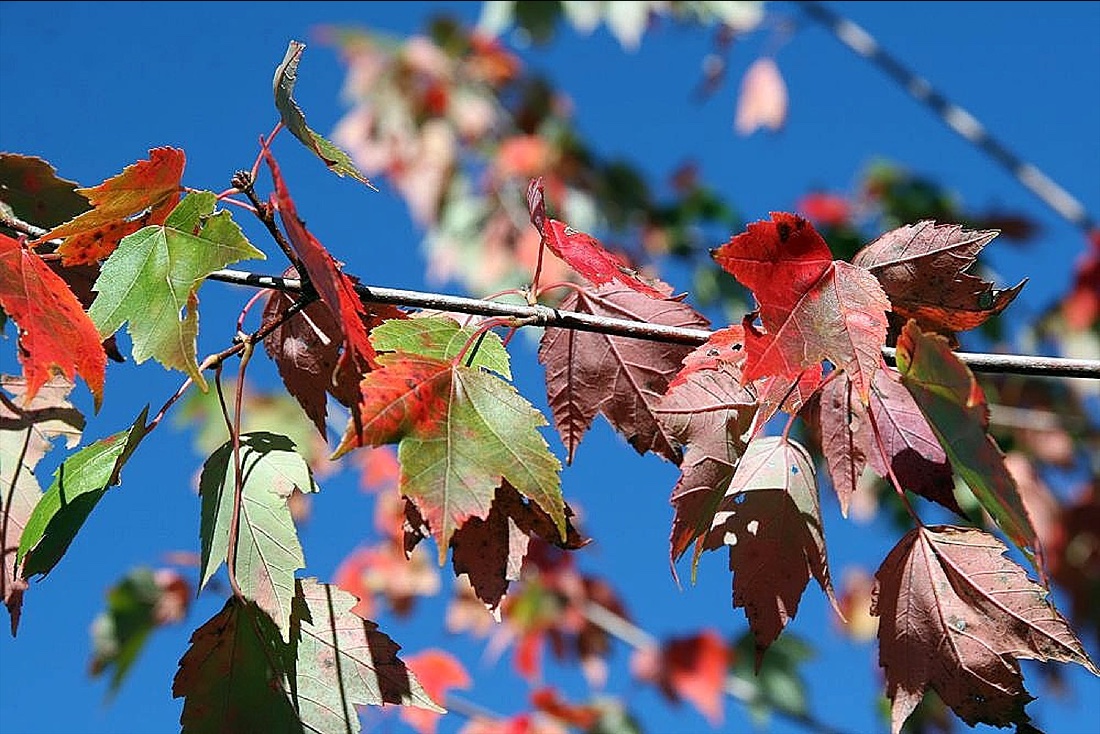
Reference photo Red Sunset Maple
- Mature height
- 40–50 ft
- Mature spread
- 25–40 ft
- Growth rate
- Fast
- Sun
- Full sun to part shade
More about this tree
- Orange to red fall color, often among the first trees to color.
- Tolerates wet soil and city conditions; shallow roots can buckle nearby pavement.
Sources: Missouri Botanical Garden, UF/IFAS, Clemson HGIC, Morton Arboretum
Request a QuotePricing depends on size, availability and installation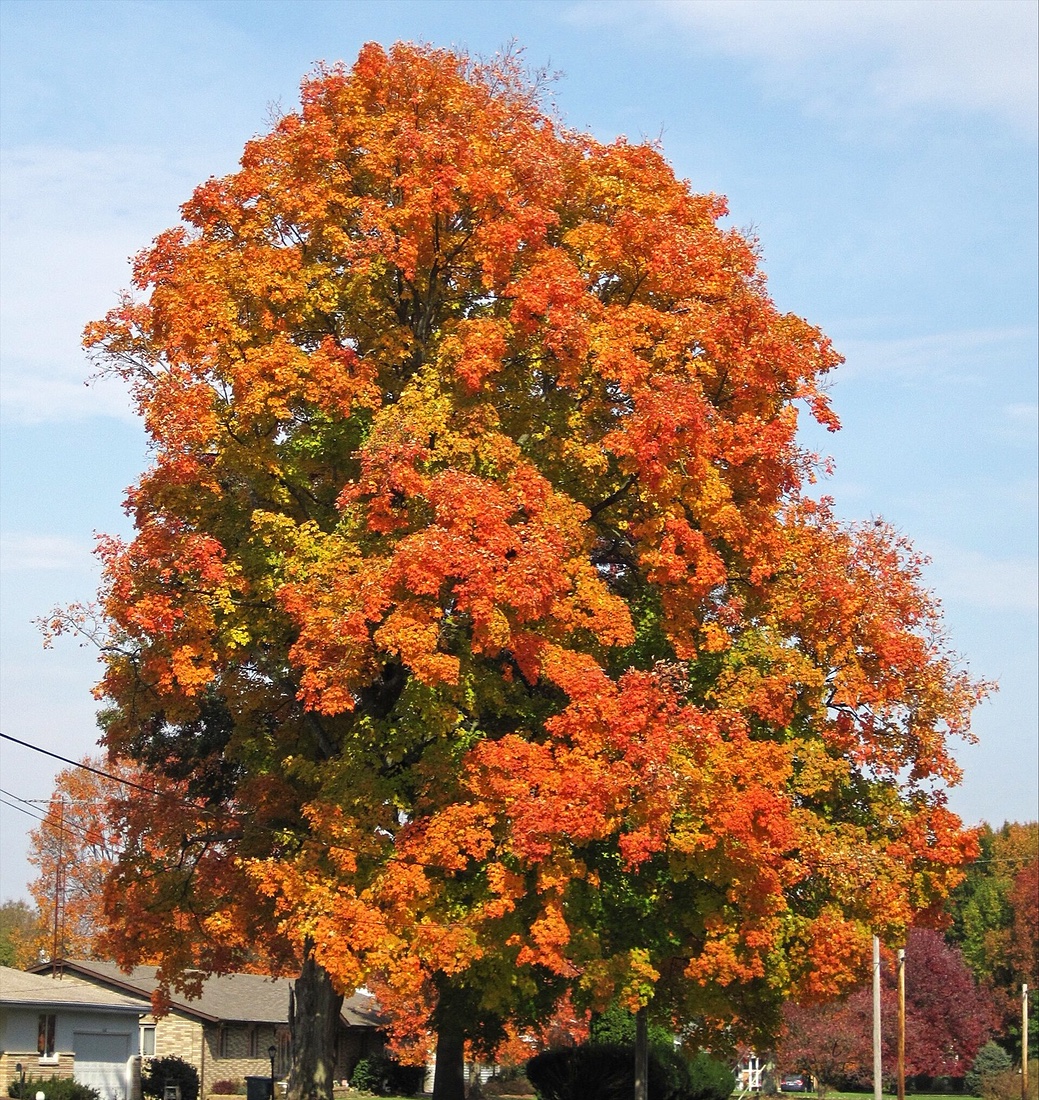
Reference photo Sugar Maple
- Mature height
- 40–80 ft
- Mature spread
- 30–60 ft
- Growth rate
- Slow to moderate, about 1 ft per year
- Sun
- Full sun; tolerates part shade
More about this tree
- Brilliant red, orange or yellow fall color; yellows are more common in the South.
- Sensitive to compacted soil, high heat, road salt and drought.
Sources: NC State Extension, Missouri Botanical Garden, UF/IFAS
Request a QuotePricing depends on size, availability and installation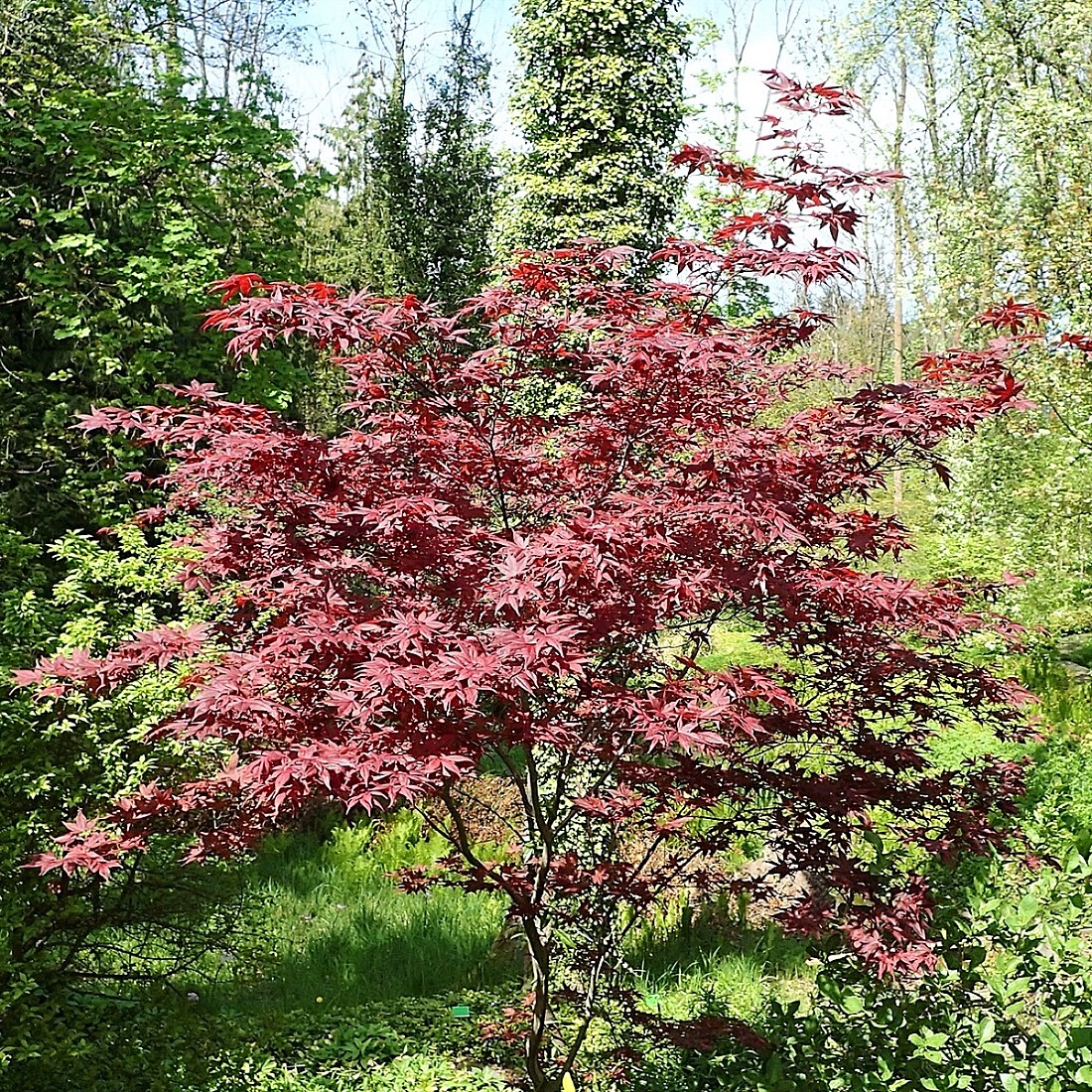
Reference photo Bloodgood Japanese Maple
- Mature height
- 15–20 ft
- Mature spread
- 15–20 ft
- Growth rate
- Slow to moderate
- Sun
- Full sun to part shade
More about this tree
- A small tree with deep red to purple-red leaves.
- Afternoon shade helps in hot summers.
- Growth rates in the sources range from slow to moderate; sizes are typical ranges.
Sources: Missouri Botanical Garden, UF/IFAS, NC State Extension
Request a QuotePricing depends on size, availability and installationPhoto: Krzysztof Ziarnek, Kenraiz, CC BY-SA 4.0, resized and cropped
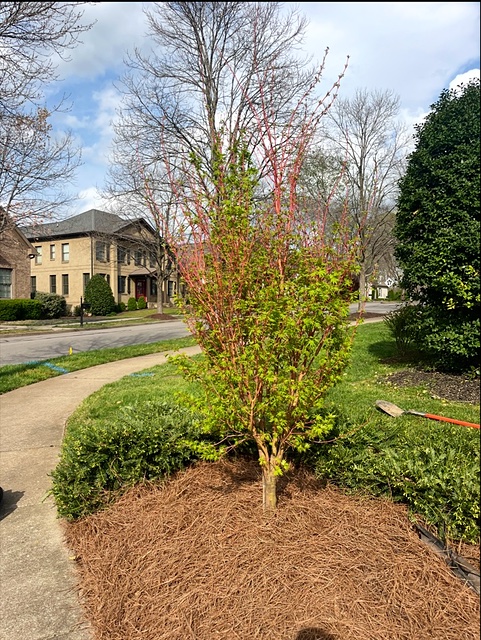
Photo by Sharp Landscaping Coral Bark Japanese Maple
- Mature height
- About 15–25 ft
- Mature spread
- About 10–20 ft
- Growth rate
- Slow
- Sun
- Part shade for best color; full sun in cooler areas
More about this tree
- Known for coral-red young stems; bark color shows best in part shade and dulls in deep shade.
- A separate variety from Bloodgood Japanese Maple.
Sources: Nursery listings
Request a QuotePricing depends on size, availability and installation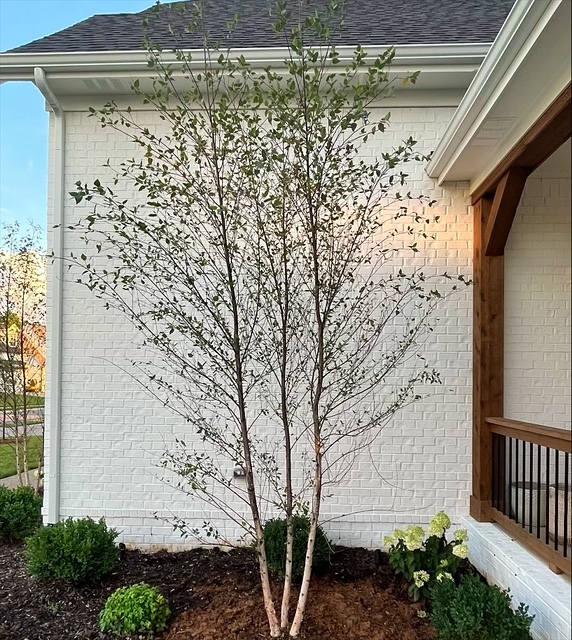
Our project photo River Birch
- Mature height
- 30–50 ft
- Mature spread
- 20–40 ft
- Growth rate
- Medium to fast, about 1½–2 ft per year
- Sun
- Full sun to part shade
More about this tree
- Often grown with several trunks.
- Cultivars vary a lot in size; compact selections exist.
Sources: Clemson HGIC, Morton Arboretum, UF/IFAS, Missouri Botanical Garden
Request a QuotePricing depends on size, availability and installation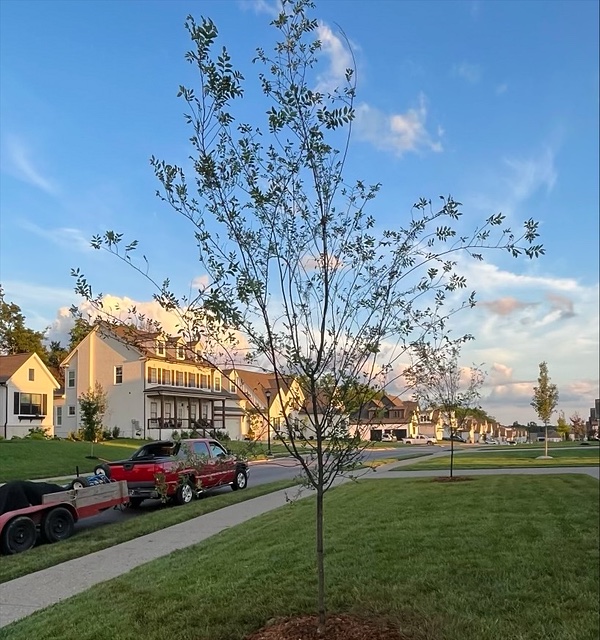
Our project photo Allee Elm
- Mature height
- 50–70 ft
- Mature spread
- 35–55 ft
- Growth rate
- Moderate to fast
- Sun
- Full sun; tolerates light shade
More about this tree
- Upright, arching vase shape; a University of Georgia release.
- Sources differ on final size.
Sources: NC State Extension, Clemson HGIC, Missouri Botanical Garden, Morton Arboretum
Request a QuotePricing depends on size, availability and installation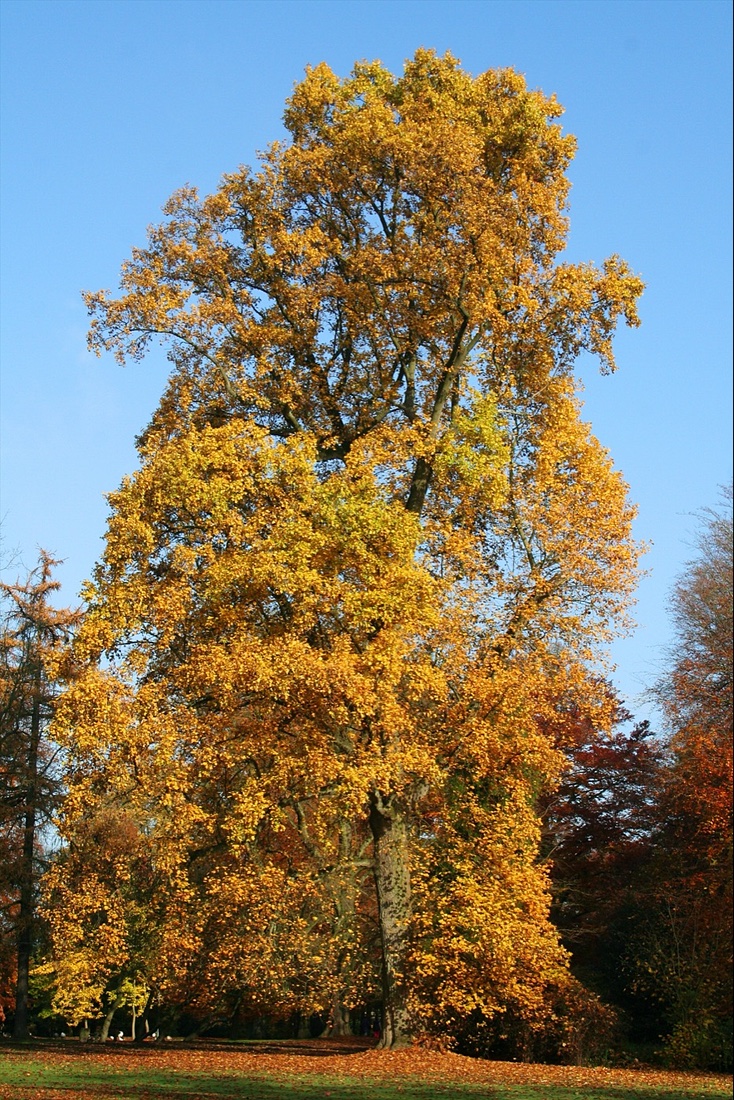
Reference photo Tulip Poplar
- Mature height
- 70–90 ft
- Mature spread
- 30–50 ft
- Growth rate
- Fast when young, slowing with age
- Sun
- Full sun; tolerates part shade
More about this tree
- A very large shade tree; best where there is lots of room.
- Yellow fall color.
- Fast growth can make the wood somewhat weak.
- Some sources list 60–100 ft.
Sources: Morton Arboretum, Missouri Botanical Garden, UF/IFAS, Penn State Extension
Request a QuotePricing depends on size, availability and installation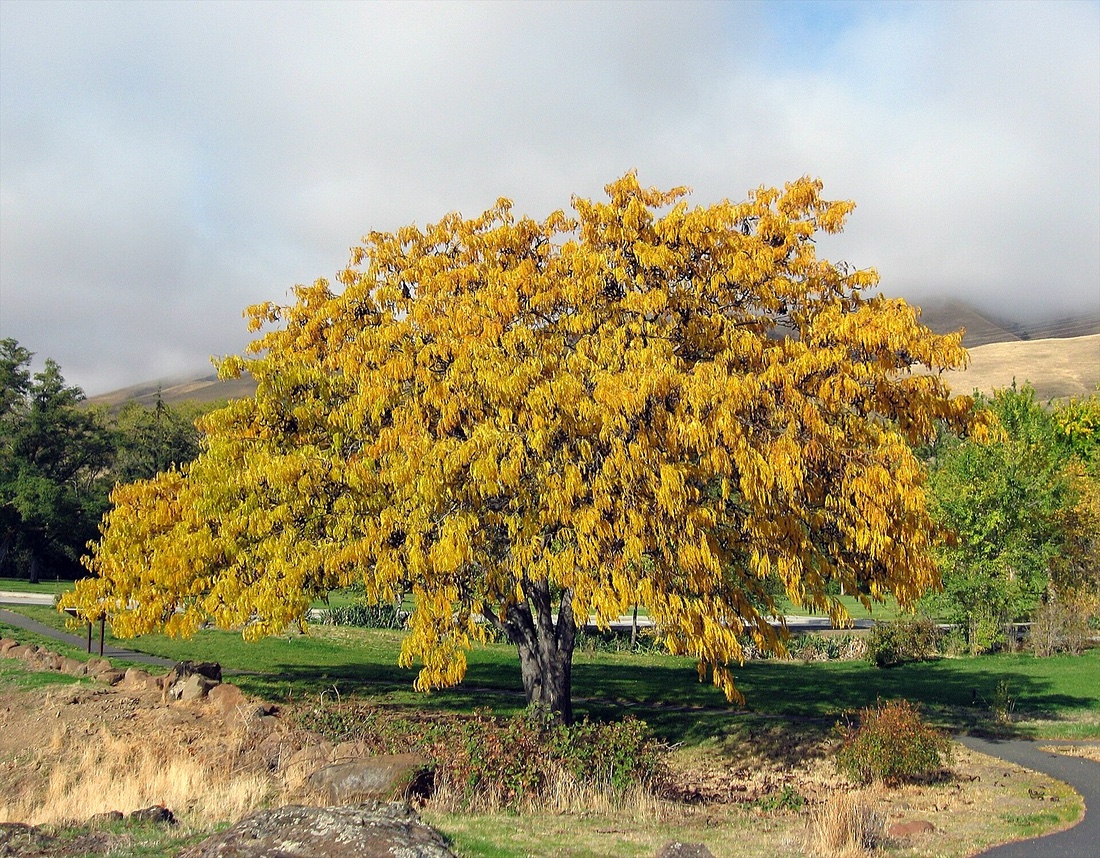
Reference photo Shade Master
- Mature height
- 50–70 ft
- Mature spread
- 35–50 ft
- Growth rate
- Fast, 2–4 ft per year
- Sun
- Full sun
More about this tree
- A thornless honeylocust with a graceful vase to oval outline.
- Yellow fall color, sometimes with copper tones. It is most reliable in cooler areas; in the South the leaves can drop early.
- That pace is for the first 15 years.
Sources: UF/IFAS, NC State Extension, Morton Arboretum
Request a QuotePricing depends on size, availability and installationPhoto shows honeylocust (Gleditsia triacanthos); the named variety may look a little different. Photo: Kevmin, CC BY-SA 3.0, resized and cropped
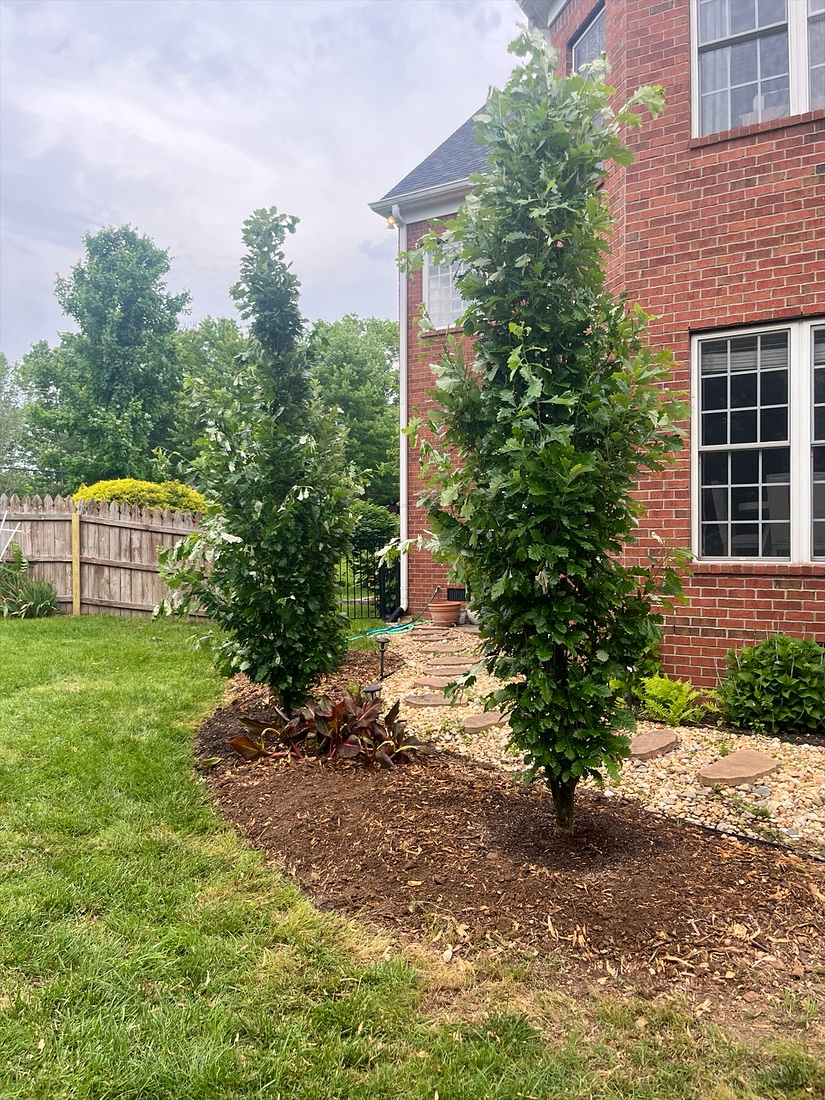
Photo by Sharp Landscaping Regal Prince Oak
- Mature height
- 40–60 ft
- Mature spread
- 15–25 ft
- Growth rate
- Moderate (some sources: slow to moderate)
More about this tree
- Narrow, upright form for its size.
- Listed under several names; it is a cross of English oak and swamp white oak.
Sources: USU Varga Arboretum, Royal Horticultural Society, Nursery listings
Request a QuotePricing depends on size, availability and installation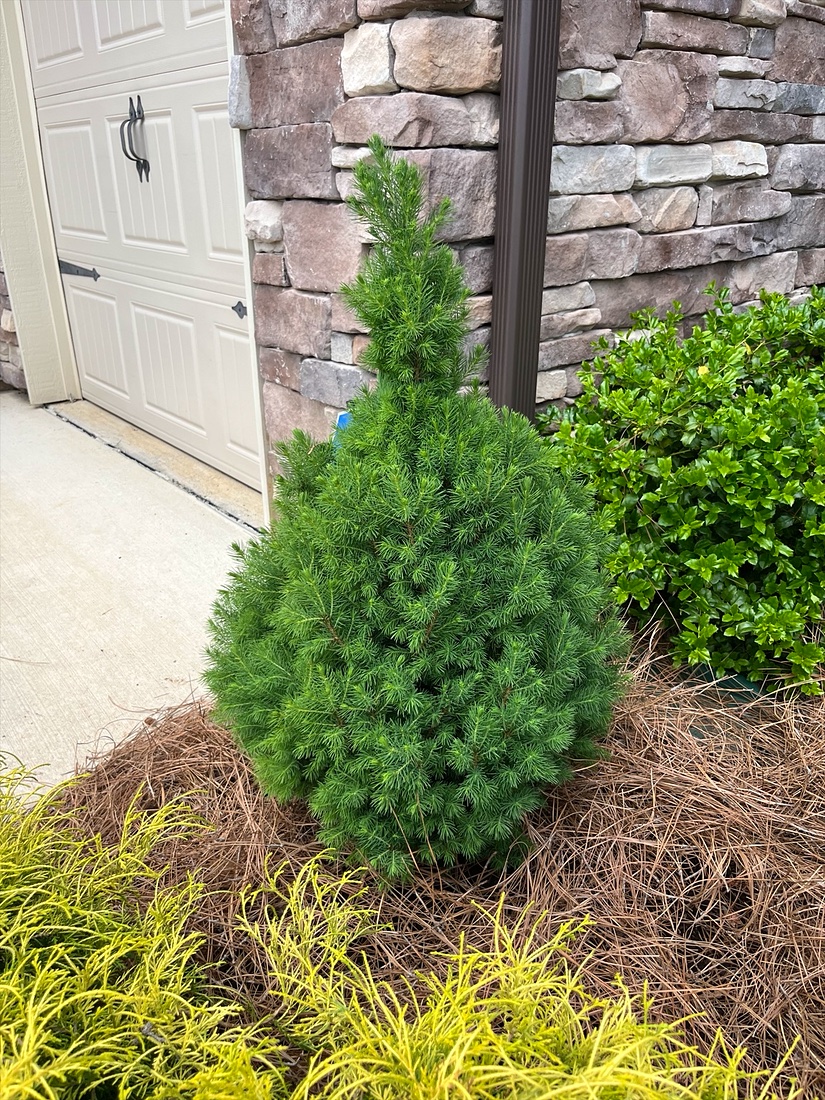
Photo by Sharp Landscaping Dwarf Alberta Spruce
- Mature height
- About 6–12 ft (sources vary)
- Mature spread
- About 3–6 ft
- Growth rate
- Slow, about 2–4 in per year
- Sun
- Full sun
More about this tree
- Dense, cone-shaped form.
- A branch can occasionally revert to the faster, longer-needled parent spruce.
Sources: Ohio State University, American Conifer Society
Request a QuotePricing depends on size, availability and installation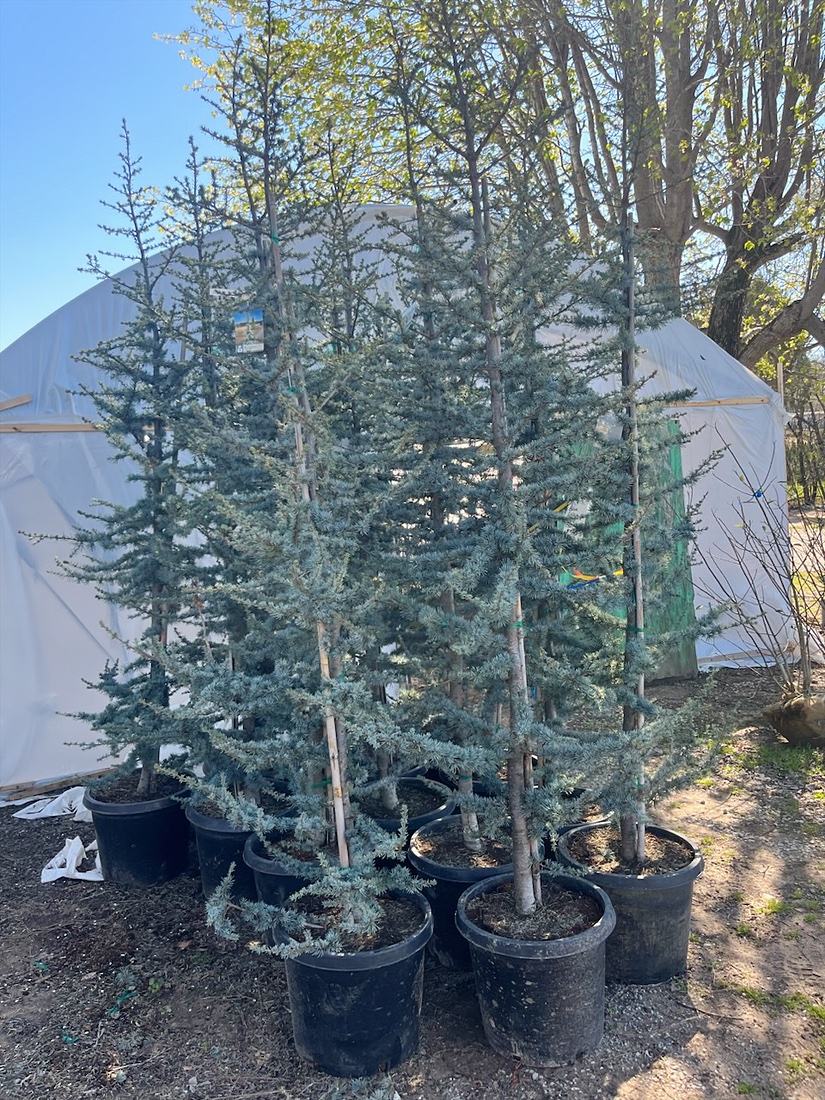
Photo by Sharp Landscaping Blue Atlas Cedar
- Mature height
- 40–60 ft
- Mature spread
- 30–40 ft
- Growth rate
- Sources differ: slow to rapid
- Sun
- Full sun
More about this tree
- Needs room: it becomes a large tree.
- The weeping form 'Glauca Pendula' is a separate, much smaller plant.
Sources: NC State Extension, Royal Horticultural Society
Request a QuotePricing depends on size, availability and installation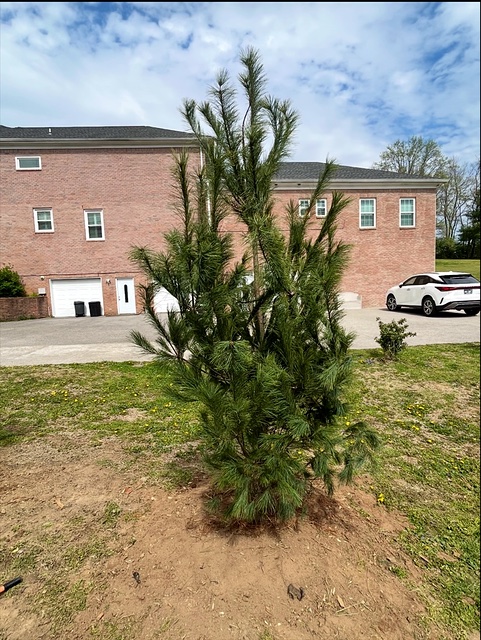
Photo by Sharp Landscaping Eastern White Pine
- Mature height
- About 50–80 ft in landscapes (to 100 ft in the wild)
- Mature spread
- About 20–40 ft
- Growth rate
- Fast (some sources: moderate)
- Sun
- Full sun; young trees tolerate light shade
More about this tree
- Prefers well-drained soil; does poorly on heavy clay or wet ground.
- Needs room: keep it well away from structures.
- Susceptible to white pine blister rust and the white pine weevil.
Sources: UF/IFAS, NC State Extension, Morton Arboretum
Request a QuotePricing depends on size, availability and installation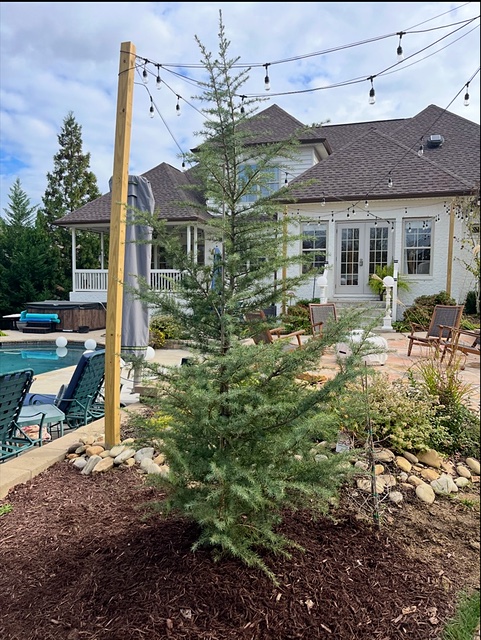
Photo by Sharp Landscaping Deodar Cedar
- Mature height
- 40–60 ft
- Mature spread
- 20–30 ft
- Growth rate
- Fast (some sources: slow to medium)
- Sun
- Full sun, at least six hours
More about this tree
- The least hardy of the true cedars; listed hardiness zones vary, about 6 to 9.
- Cold-hardier selections exist.
- The top can die back from cold or disease.
Sources: UF/IFAS, Virginia Tech Extension, NC State Extension, Utah State Extension
Request a QuotePricing depends on size, availability and installation


Shrubs
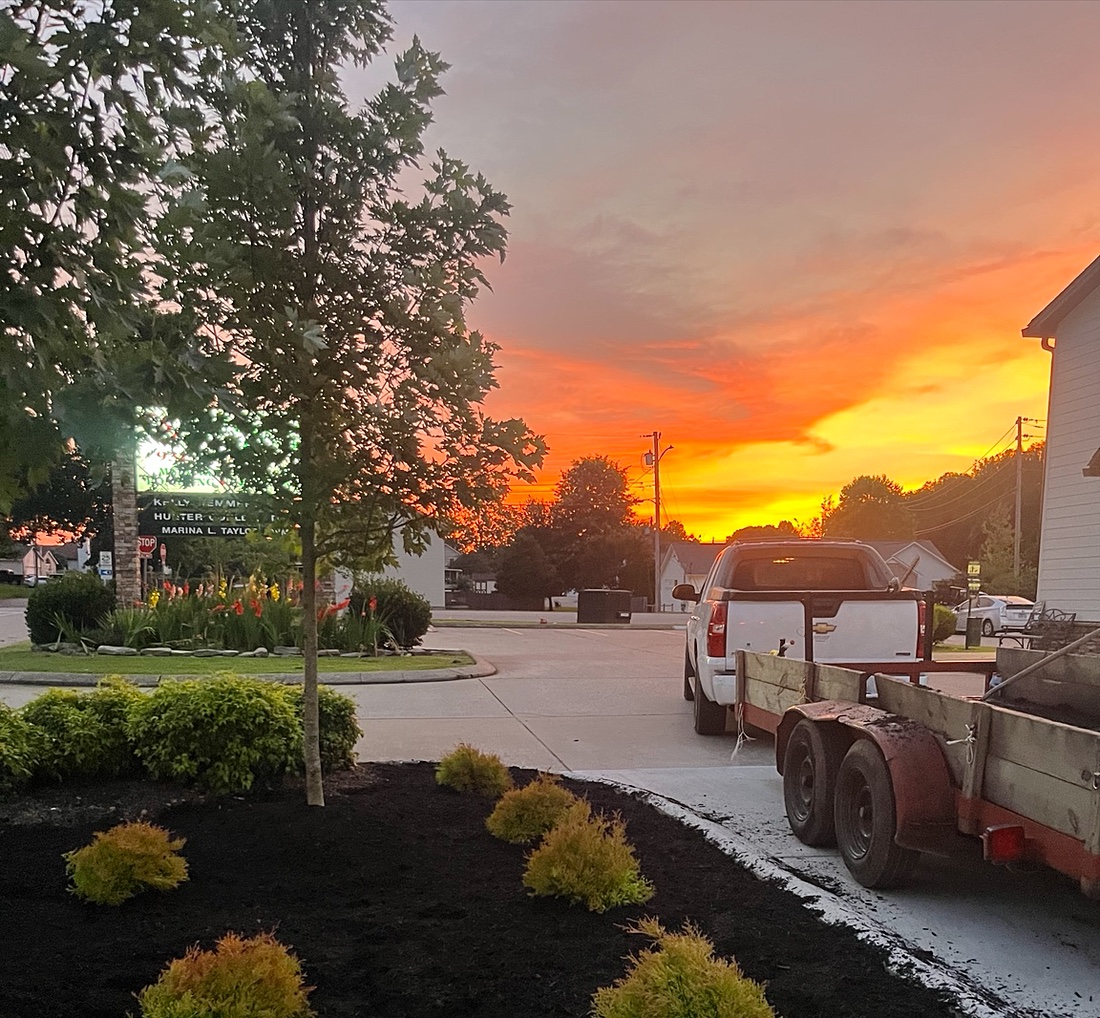
Photo by Sharp Landscaping Fire Chief Arborvitae
- Mature height
- About 3–4 ft (nursery listings vary)
- Mature spread
- About 3–4 ft
- Sun
- Full sun
More about this tree
- A small, rounded arborvitae, not a tall privacy tree.
- Sources disagree on growth rate.
Sources: Nursery listings
Request a QuotePricing depends on size, availability and installation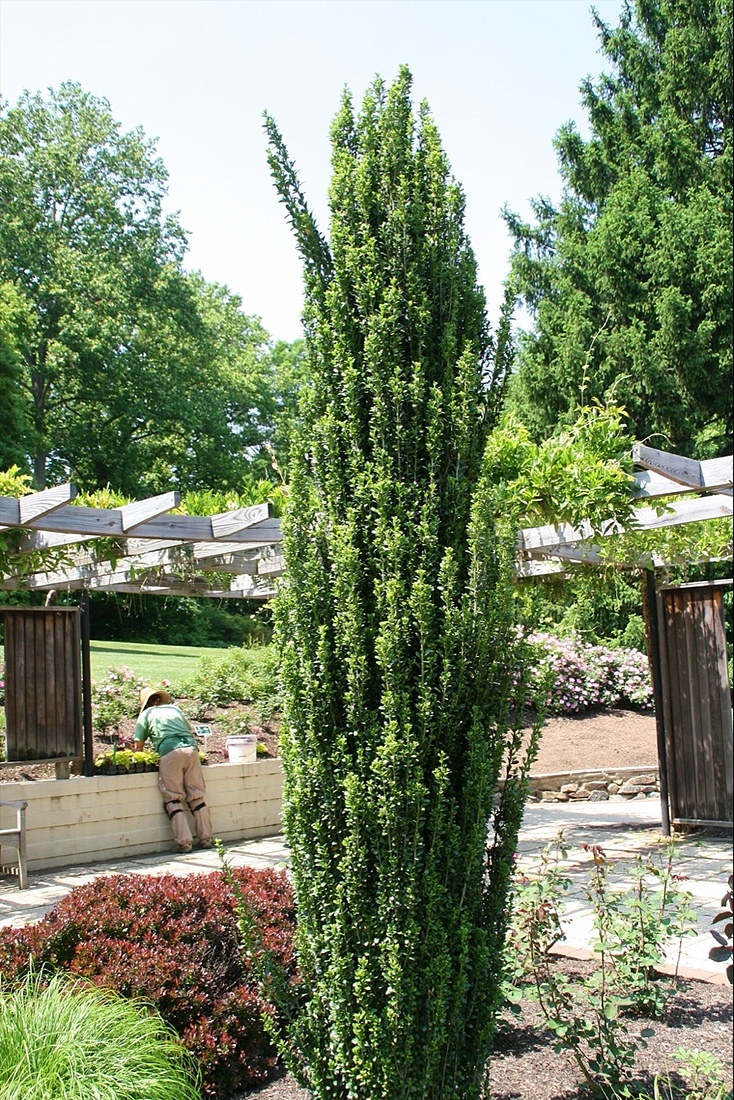
Reference photo Sky Pencil Holly
- Mature height
- 4–10 ft
- Mature spread
- 1–3 ft
- Growth rate
- Slow
- Sun
- Full sun to part shade
More about this tree
- An exceedingly narrow, upright holly, good for tight spaces and accents.
- A shorter plant may be only 10–12 in. wide; width grows with height.
Sources: Missouri Botanical Garden, NC State Extension
Request a QuotePricing depends on size, availability and installation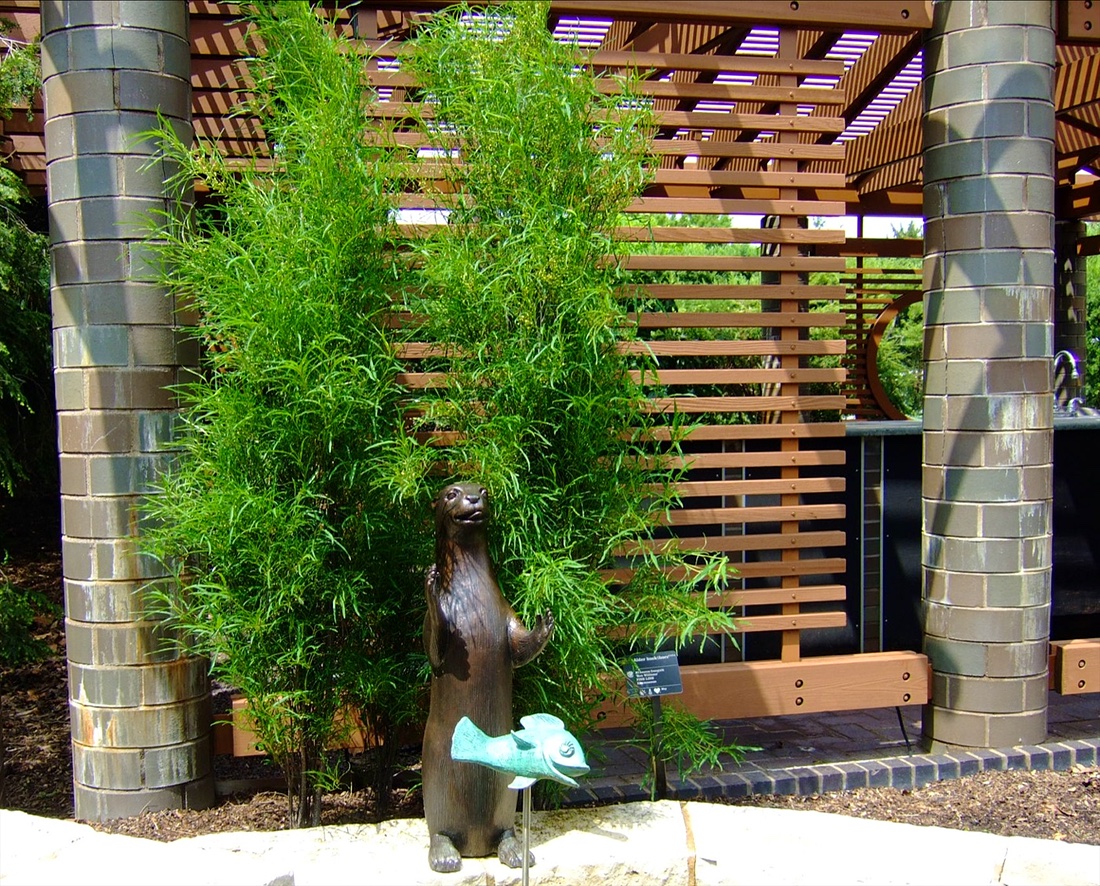
Reference photo Fine Line Buckthorn
- Mature height
- 5–7 ft
- Mature spread
- About 2 ft
- Growth rate
- Slow
More about this tree
- A very narrow, upright shrub, sold as Fine Line (Ron Williams).
- Its parent species is invasive in parts of the Northeast and Midwest; this cultivar is reported not to self-seed. Check local rules before planting.
Sources: Missouri Botanical Garden, Penn State Extension
Request a QuotePricing depends on size, availability and installation- Evergreen
Photo coming soonSkip Laurel
- Mature height
- 6–8 ft typical; 10 ft or more if left unpruned
- Mature spread
- 5–6 ft (more if left unpruned)
- Growth rate
- Medium, about 1 ft per year
- Sun
- Full sun to part shade
More about this tree
- Dense evergreen often used as a screen or hedge.
- Nursery listings give larger sizes (10 to 18 ft tall) for unpruned plants.
Sources: University of Maryland Extension, Nursery listings
Request a QuotePricing depends on size, availability and installation 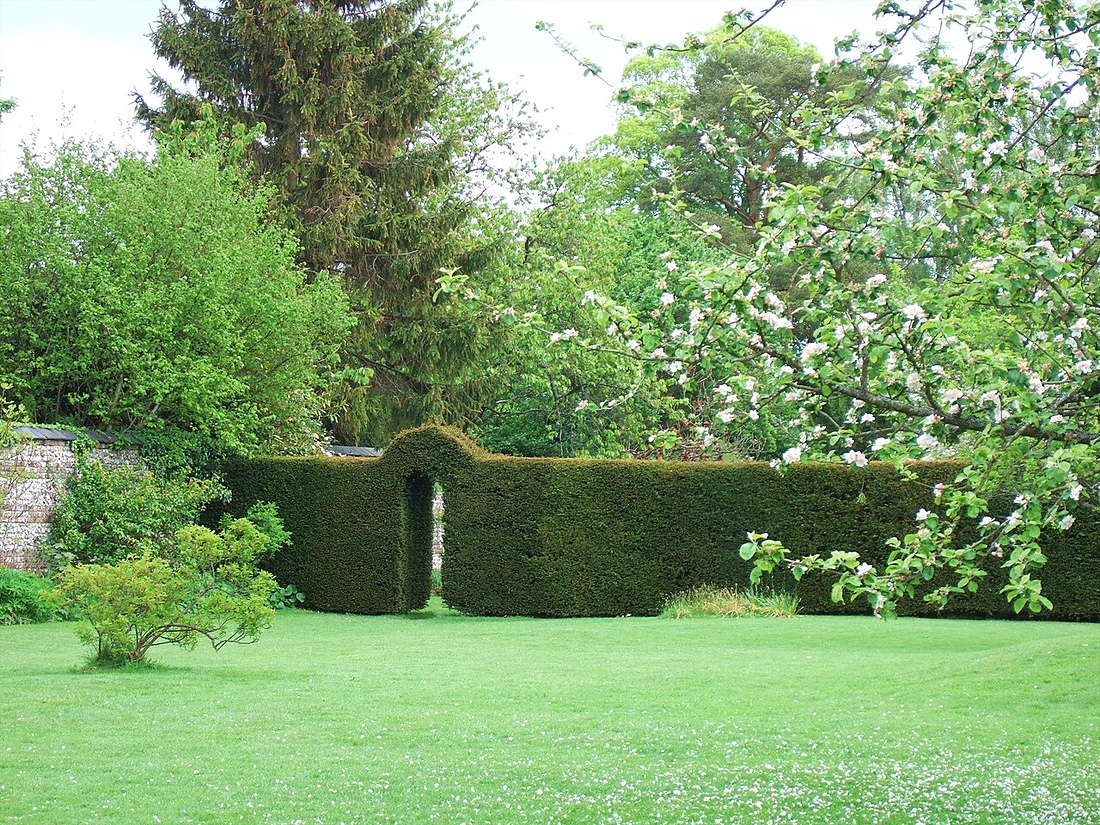
Reference photo English Yew
- Mature height
- 20–25 ft unpruned (varieties vary widely)
- Mature spread
- 15–20 ft unpruned
- Growth rate
- Slow
- Sun
- Full sun to part shade
More about this tree
- Often clipped as a hedge.
- Toxic if eaten, according to the Royal Horticultural Society.
- Upright and dwarf varieties stay much smaller.
Sources: UF/IFAS, Royal Horticultural Society
Request a QuotePricing depends on size, availability and installationPhoto shows a clipped hedge of Taxus baccata; the named variety may look a little different. Photo: Rowan Adams, CC BY-SA 4.0, resized and color-adjusted
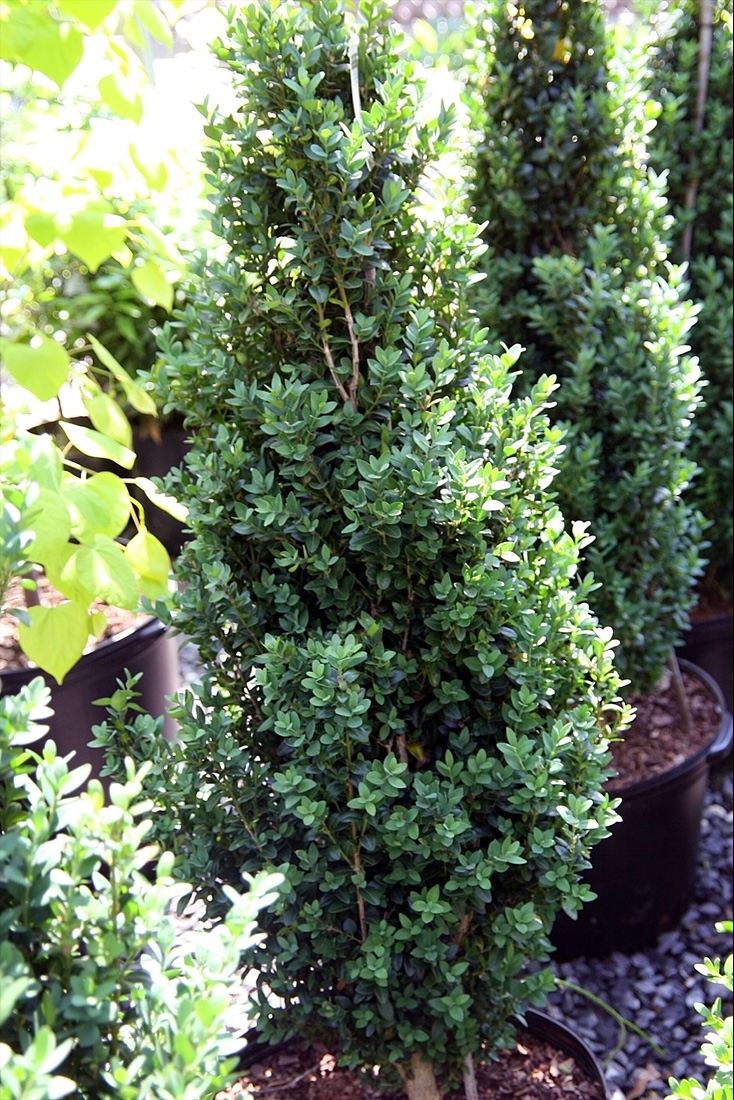
Reference photo Dee Runk Boxwood
- Mature height
- 8–10 ft
- Mature spread
- 2–3 ft
- Growth rate
- Slow to medium
- Sun
- Full sun to part shade
More about this tree
- A narrow, columnar boxwood used as a tall hedge, an accent or a specimen in a narrow space.
- Best with some shade, since full sun can scorch leaves.
Sources: Clemson HGIC, Missouri Botanical Garden, NC State Extension
Request a QuotePricing depends on size, availability and installation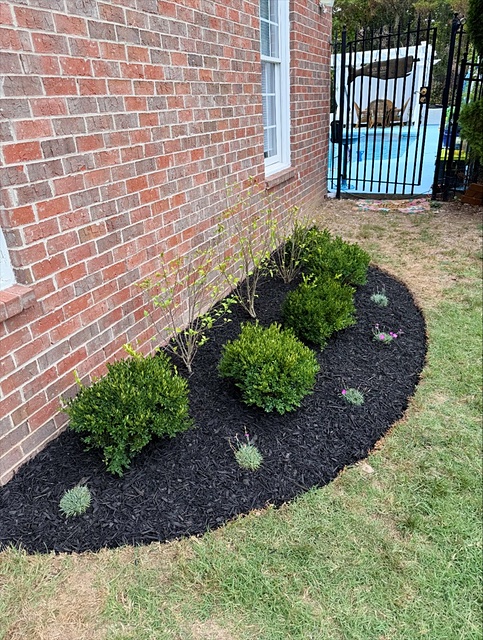
Photo by Sharp Landscaping Boxwood
More about this tree
- Boxwood varieties differ a lot in size and shape, so ask which varieties are available.
Request a QuotePricing depends on size, availability and installation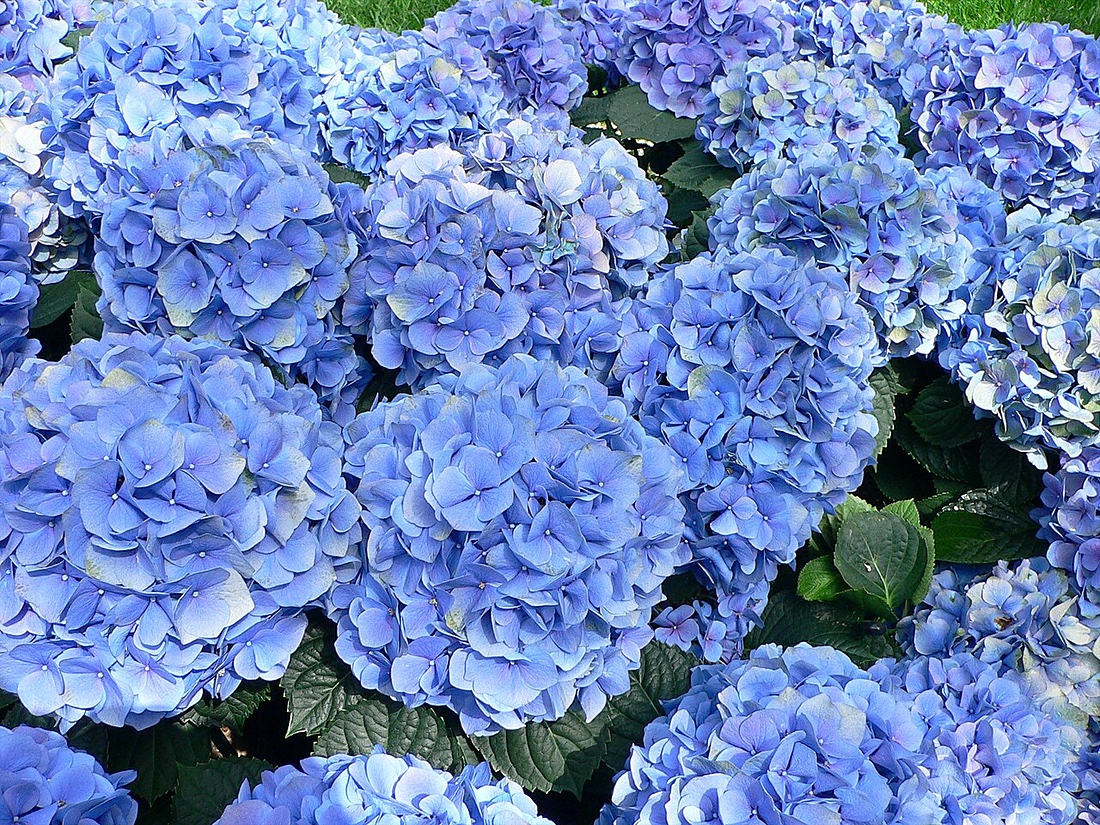
Reference photo Bigleaf Hydrangea
- Mature height
- About 4–6 ft for common garden varieties
- Mature spread
- About 4–6 ft
- Sun
- Part shade; full sun only with steady moisture
More about this tree
- Size varies a lot by variety: compact types stay 1 to 3 ft, older varieties can reach 6 to 10 ft.
- Flower color of many varieties depends on soil acidity.
Sources: UF/IFAS, Nursery listings
Request a QuotePricing depends on size, availability and installationPhoto shows the flowers of Hydrangea macrophylla; the named variety may look a little different. Photo: Raul654, CC BY-SA 3.0, resized and color-adjusted
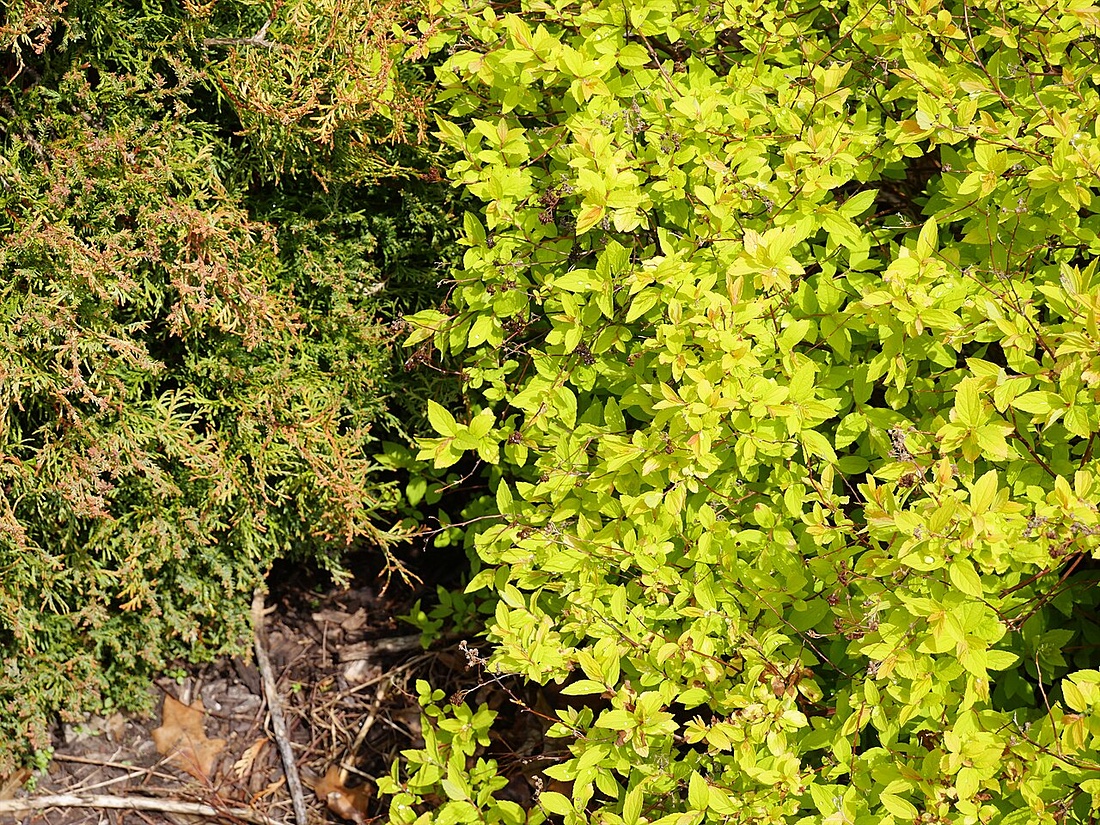
Reference photo Gold Mound Spirea
- Mature height
- About 2–3 ft
- Mature spread
- About 3–4 ft
- Sun
- Full sun for best foliage color
More about this tree
- Low, mounding shrub with gold-green foliage.
- Can spread by suckers and self-seed, according to NC State Extension.
Sources: NC State Extension, Royal Horticultural Society
Request a QuotePricing depends on size, availability and installationPhoto: F. D. Richards, CC BY-SA 2.0, resized and color-adjusted
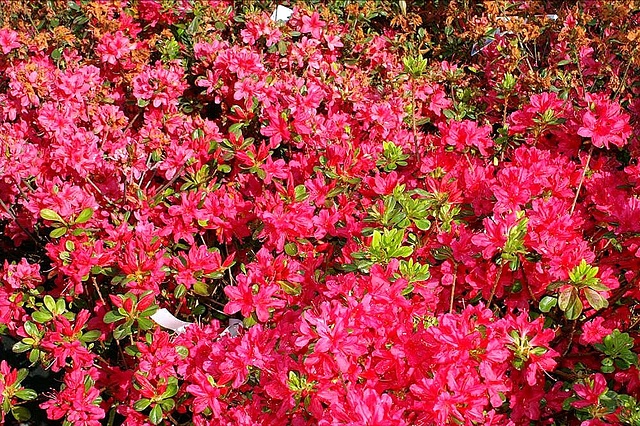
Reference photo Hinodegiri Azalea
- Mature height
- About 3–4 ft (sources range 2 to 6 ft)
- Mature spread
- About 3–4 ft
- Sun
- Part sun to part shade
More about this tree
- Low, spreading azalea with bright red spring flowers.
- Often listed as evergreen; some sources call it semi-evergreen.
- Prefers moist, well-drained, acidic soil.
Sources: American Rhododendron Society, Royal Horticultural Society, Nursery listings
Request a QuotePricing depends on size, availability and installationPhoto: David J. Stang, CC BY-SA 4.0, resized and color-adjusted
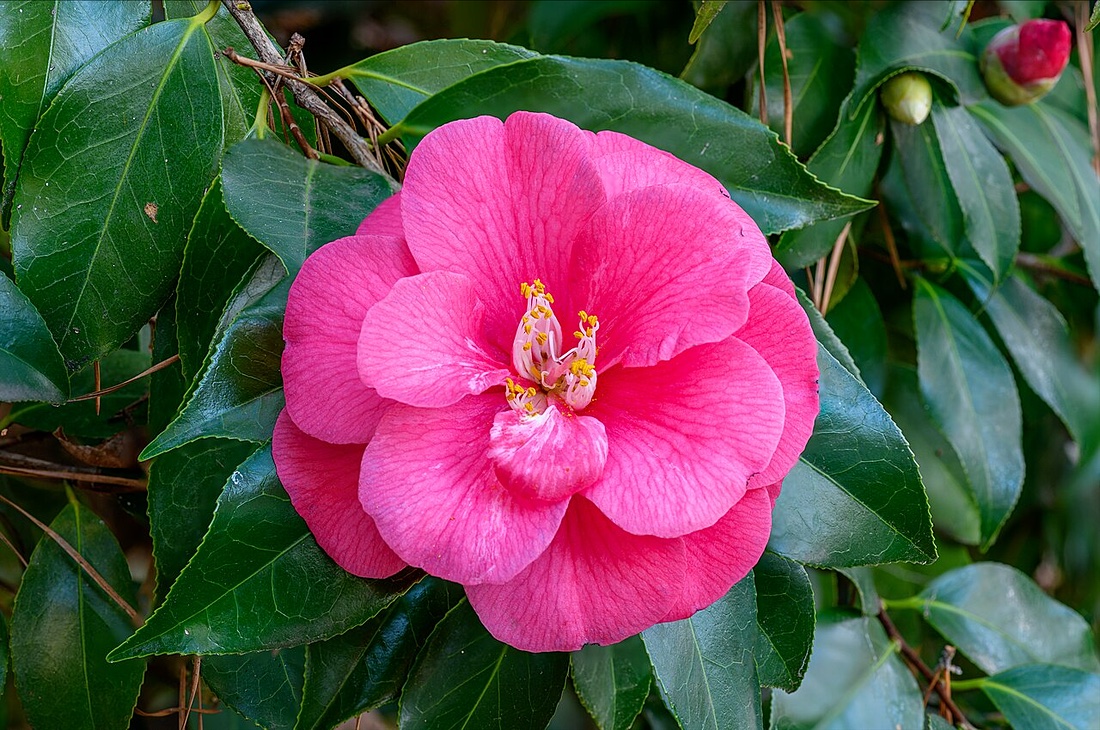
Reference photo Japanese Camellia
- Mature height
- About 7–12 ft
- Mature spread
- About 5–10 ft
- Growth rate
- Slow
- Sun
- Partial shade, out of hot afternoon sun
More about this tree
- Size varies by variety.
- Too much shade can mean fewer flowers.
Sources: UF/IFAS, Clemson HGIC
Request a QuotePricing depends on size, availability and installationPhoto shows the flower of Camellia japonica; the named variety may look a little different. Photo: PumpkinSky, CC BY-SA 3.0, resized and color-adjusted
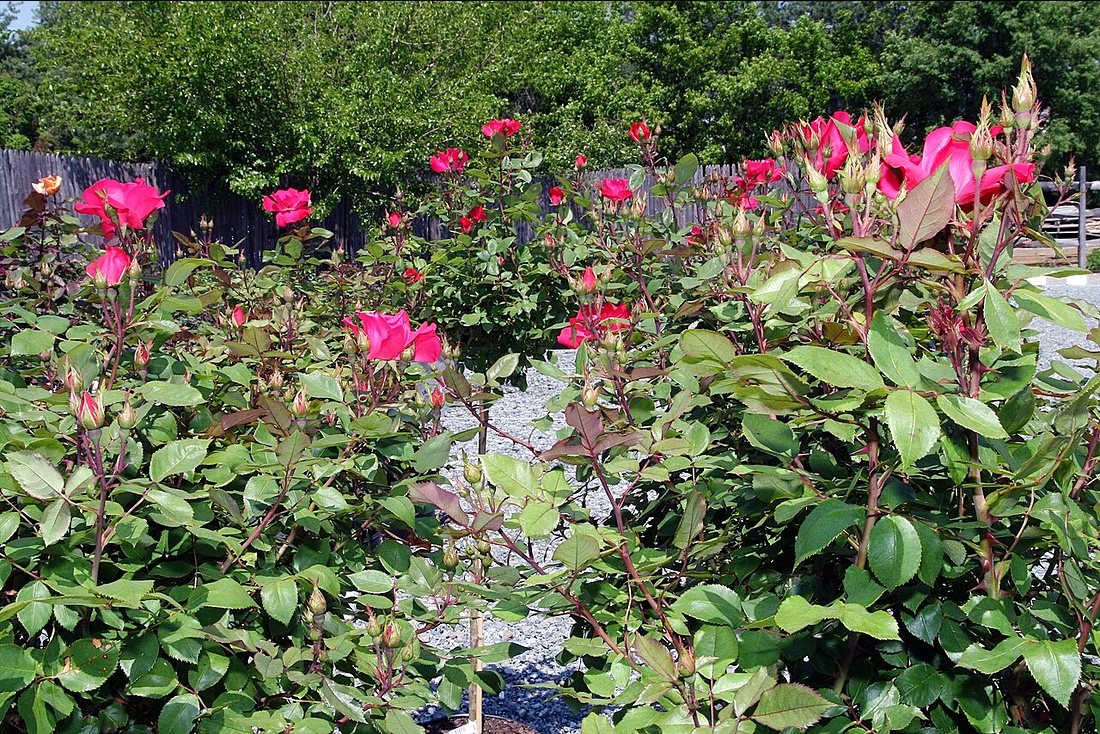
Reference photo Knock Out Rose
- Mature height
- About 3–4 ft (some varieties to 5 ft)
- Mature spread
- About 3–4 ft
- Sun
- Full sun
More about this tree
- Several Knock Out varieties exist; sizes differ slightly by variety.
- Needs about six or more hours of sun.
Sources: Nursery listings
Request a QuotePricing depends on size, availability and installationPhoto: David J. Stang, CC BY-SA 4.0, resized and color-adjusted


Showing of 48 plants
Planting guide
Evergreen Privacy Screens: Planting Styles & Benefits
A privacy screen can be laid out several ways. The right one depends on your space, the tree you choose and how quickly you want it to fill in. These are four common styles.
Single row
One line of evergreens along a fence or property line. It uses the fewest trees and the least room, so it suits narrow spaces. It fills in as the trees grow wider, so spacing matters.
Staggered double row
Two offset rows, with each tree set in the gap of the row in front of it. It makes a deeper, fuller screen and can close gaps sooner, but it uses more trees and needs more width.
Mixed evergreens
Different evergreens planted together for variety in color, texture and height. A mix looks less uniform than a single variety.
Natural or curved planting
A gently curving or loosely grouped line that follows the yard instead of a straight edge. It can feel softer and more natural, and it works well along a curved bed.
An evergreen screen gives year-round privacy and a green backdrop in every season. Spacing depends on each tree's mature width, so check the card for the variety you like, then ask us which style fits your space.
Our plants
Where Do We Get Our Trees and Plants?
At Sharp Landscaping, we are not a traditional retail nursery, so we do not have a location where customers can come and browse plants.
Instead, we take a more personalized approach. We travel beyond Williamson County to work with nurseries and growers throughout Tennessee and neighboring states, sourcing quality trees and plants at competitive prices.
The trees and plants we offer are grown at nurseries across Tennessee, Georgia, and Alabama.
By sourcing directly from a variety of nurseries, we are able to offer our customers a wider selection of healthy, quality plants at great prices.
Our goal is simple: to provide beautiful, healthy trees and plants at affordable prices, along with professional planting services.
Ready when you are
We work across Williamson County, and within 60 miles of Franklin, Tennessee.